RV water filters are a secondary thought before hitting the road. There’s a certain freedom that comes with living life on the road—the open highways, the ever-changing landscapes, and the simple joy of waking up to a new view outside our Alliance fifth wheel’s window each morning.
My wife and I have embraced this nomadic lifestyle wholeheartedly, trading the monotony of a stationary home for the endless possibilities that come with full-time RV living.
But amidst all the adventure, there’s one thing we’ve learned you can’t compromise on: clean, safe drinking water.
Why Water Filters Are Essential on the Road
When you’re constantly moving from one campground to another, you quickly realize that not all water sources are created equal. We’ve encountered everything from crystal-clear mountain spring water to taps that spew out something resembling a science experiment gone wrong.
According to the Environmental Working Group, tap water in many U.S. cities contains contaminants that exceed health guidelines, including lead, arsenic, and harmful disinfectant byproducts.
Take Flint, Michigan, for example—a stark reminder that water quality can’t be taken for granted. Or consider that the Natural Resources Defense Council found that nearly 77 million Americans were served by water systems violating federal protections in 2015 alone.
As full-time RVers, we’re exposed to a patchwork of municipal and well water systems, each with its own set of issues.
So, unless you’re keen on turning your stomach into a filtration system, investing in a reliable water filter isn’t just a good idea—it’s essential. After trial and error (and a few unfortunate sips), we’ve narrowed down our top three picks for RV water filters: the good, the better, and the best.
The Good: Camco TastePURE Water Filter
Approximate Price: $20-$30
Features and How It Works
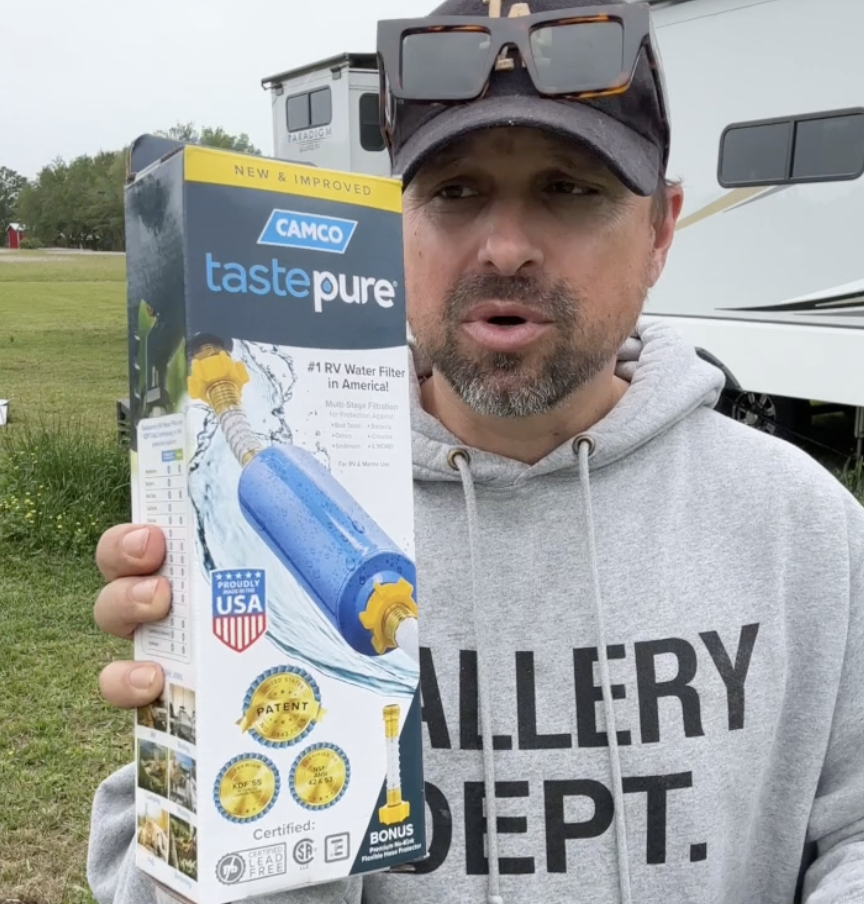
The Camco TastePURE Water Filter is like the trusty pocketknife of RV water filters—affordable, straightforward, and gets the job done when you need it. This inline filter connects directly to your freshwater hose, filtering the water before it even enters your RV’s system.
Key Features:
- Granular Activated Carbon (GAC): Reduces bad taste, odors, chlorine, and sediment.
- KDF (Kinetic Degradation Fluxion) Technology: Prevents bacterial growth when the filter is not in use.
- High Flow Rate: Ensures adequate water pressure for showers and appliance use.
- Flexible Hose Protector: Prevents kinking and extends the life of the filter.
Installation
Installation is as painless as our neighbor’s chihuahua is loud. Simply screw the filter onto the campground’s water spigot, attach your drinking water hose to the other end, and you’re in business. No tools, no fuss—just the way we like it.
Pros and Cons
Pros:
- Affordable: Won’t break the bank, leaving more funds for that extra tank of gas or a campground upgrade.
- Easy Installation: No need to summon your inner MacGyver.
- Compact and Lightweight: Easy to store when not in use.
Cons:
- Limited Lifespan: Typically lasts one camping season or about three months.
- Basic Filtration: Doesn’t remove all contaminants, especially not the microscopic nasties.
- Flow Rate May Decrease Over Time: As sediment builds up, you might notice a drop in water pressure.
Ideal For
The weekend warrior or part-time RVer who needs a quick, affordable solution to improve water taste and reduce basic contaminants. If you’re not too concerned about ultra-purification and just want to avoid drinking water that tastes like a rusty pipe, this is your filter.
Our Hot Take
We’ve used the Camco TastePURE during our early days on the road (and still use it as our first line of defense today). It was a significant step up from unfiltered water, especially in campgrounds where the water tasted like it had ambitions to become a mineral deposit.
However, as our travels took us to more remote locations with questionable water sources, we felt the need for something more robust.

The Better: Big Berkey Water Filter System
Approximate Price: $350-$400
Features and How It Works
The Big Berkey Water Filter System is the overachiever in the world of gravity-fed water filters. Standing tall on our countertop, it became an indispensable part of our daily routine.

Key Features:
- Gravity-Fed Filtration: No electricity or plumbing required.
- Powerful Purification Elements: Removes over 200 contaminants including bacteria, viruses, heavy metals, pesticides, and pharmaceuticals.
- Long-Lasting Filters: Each Black Berkey filter element lasts up to 3,000 gallons.
- Stainless Steel Construction: Durable and easy to clean.
Installation
Setting up the Big Berkey is about as straightforward as assembling a two-piece puzzle:
- Assemble the Chambers: Stack the upper chamber (where unfiltered water goes) onto the lower chamber (where filtered water collects).
- Prime the Filters: This involves flushing water through the filters to remove any manufacturing dust.
- Install the Filters: Screw the Black Berkey elements into the upper chamber.
- Add Water: Fill the upper chamber and let gravity do its thing.
Pros and Cons
Pros:
- Exceptional Filtration: Removes a wide range of contaminants, making even pond water safe to drink (though we haven’t been that desperate—yet).
- No Electricity Needed: Perfect for boondocking or during power outages.
- Economical in the Long Run: Despite the upfront cost, the long filter life means less frequent replacements.
Cons:
- Bulky: Takes up valuable counter space in our RV kitchen.
- Manual Operation: You have to refill it manually, which can be a chore if you consume a lot of water.
- Pricey Initial Investment: It’s a chunk of change upfront.
Ideal For
Full-time RVers or families who prioritize clean drinking water and are willing to invest time and counter space for peace of mind. If you find yourself in areas with highly questionable water quality, the Big Berkey is a reliable companion.
Our Hot Take
The Big Berkey became our road-trip sidekick for a good while. Knowing we had access to clean, safe drinking water regardless of our campground’s water source was a game-changer. The manual refilling was a small price to pay, though we did grumble on occasion—usually when one of us forgot to refill it and discovered this fact only after working up a thirst.
The Best: Acuva UV-LED Water Purification System
Approximate Price: $600-$1,200 (depending on model)
Features and How It Works
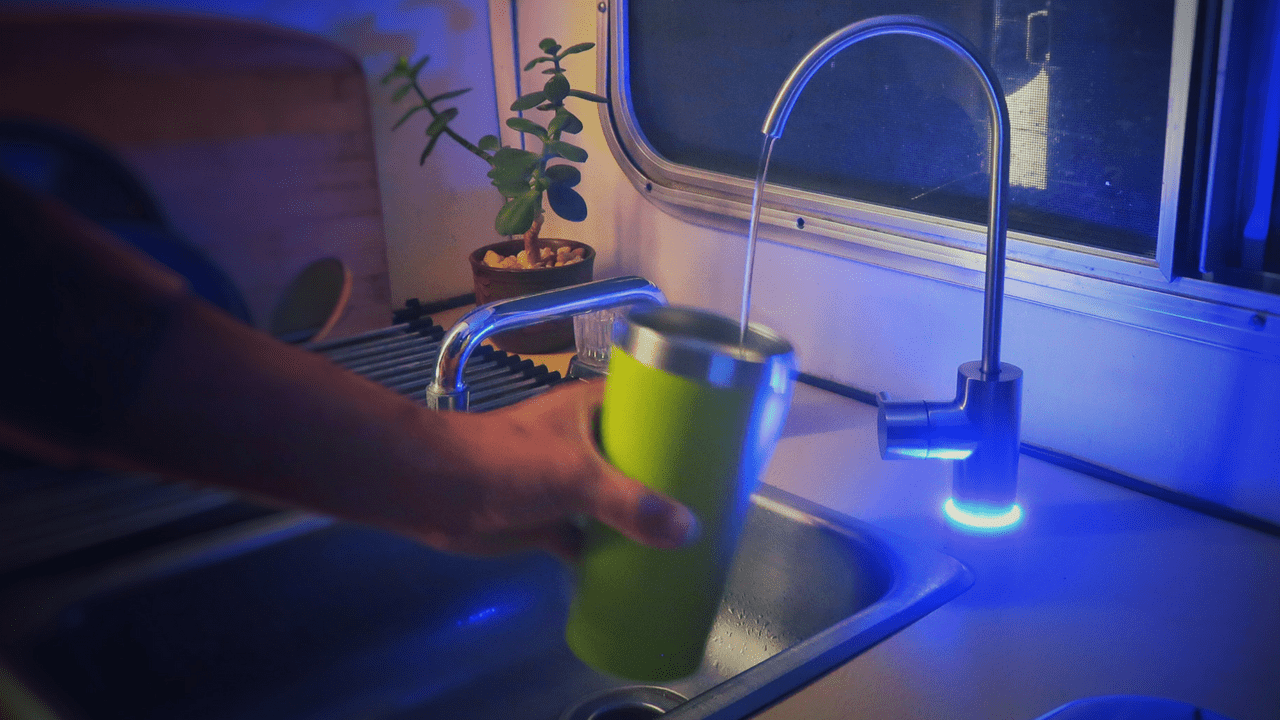
Enter the Acuva UV-LED Water Purification System—the Rolls-Royce of RV water filters. This under-sink system uses advanced UV-LED technology to zap 99.9999% of bacteria and viruses, ensuring every drop is as pure as a mountain spring (minus the bears).
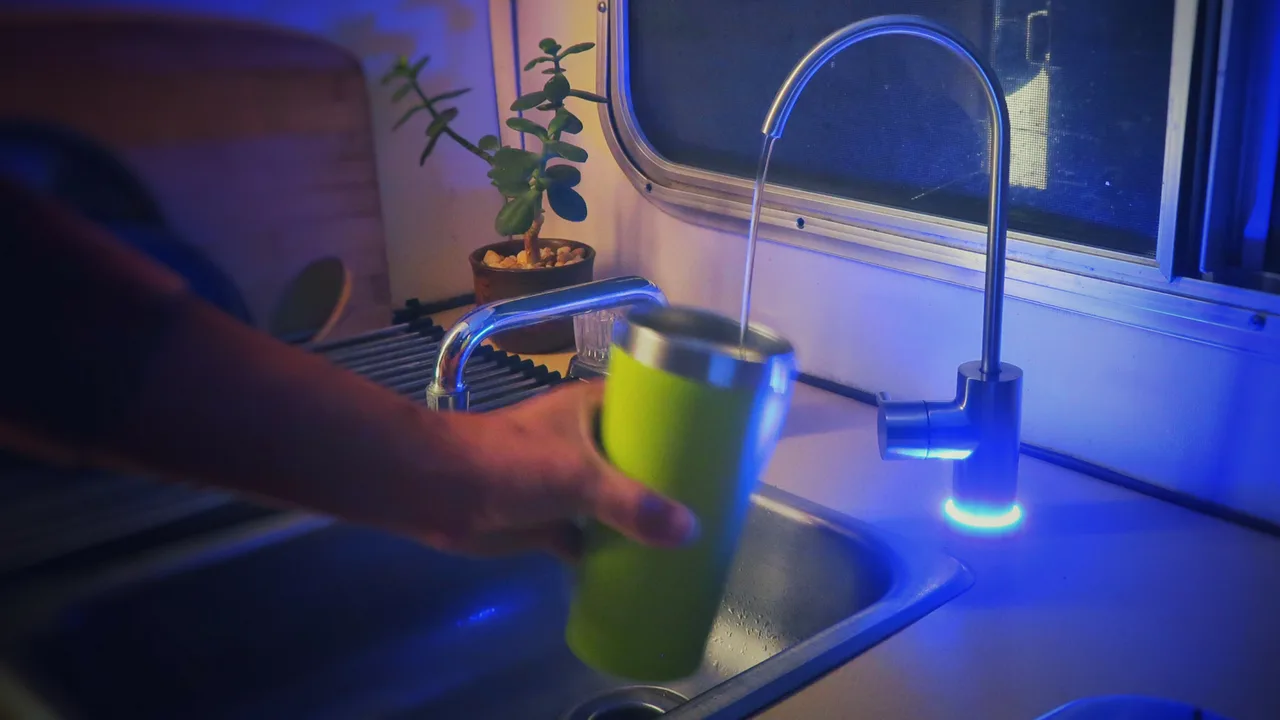
Key Features:
- UV-LED Technology: Instant purification without the use of chemicals.
- Long Lifespan: LEDs last significantly longer than traditional UV lamps.
- On-Demand Purification: Activates only when you turn on the faucet, conserving energy.
- NSF/ANSI Certified: Meets rigorous standards for drinking water safety.
Installation
Installation is a bit more involved and might require channeling your inner handyman—or hiring one:
- Mount the Unit: Typically installed under the sink or near the water source.
- Connect the Tubing: Attach the system to your cold water line and dedicated faucet (included in most kits).
- Power Connection: Requires a 12V DC power source, common in RVs.
- Test the System: Check for leaks and ensure the UV light activates when the faucet is turned on.
Pros and Cons
Pros:
- High-Level Purification: Eliminates virtually all harmful microorganisms.
- Low Maintenance: No filters to change regularly; just occasional cleaning.
- Compact Design: Saves counter space—a precious commodity in RVs.
- Eco-Friendly: No waste water or chemical additives.
Cons:
- Higher Cost: It’s an investment, but can you really put a price on not getting Giardia?
- Requires Power Source: Needs electricity to operate, which could be a concern when boondocking unless you have a robust solar setup.
- Professional Installation Recommended: Unless you’re confident with plumbing and electrical work.
Ideal For
The discerning RVer who wants the highest level of water safety without compromising on space or convenience. Perfect for full-timers who frequent remote locations or international travelers where water quality is uncertain.
Our Hot Take
After installing the Acuva system, we felt like we’d upgraded from a trusty steed to a rocket ship. The convenience of on-demand purified water straight from the tap was a luxury we quickly got used to. The initial cost stung a bit, but considering the peace of mind and the savings on bottled water (not to mention the reduction in plastic waste), we saw it as a worthwhile investment in our health and comfort.
Comparison Chart
| Feature | Camco TastePURE | Big Berkey | Acuva UV-LED System |
|---|---|---|---|
| Approximate Price | $20-$30 | $350-$400 | $600-$1,200 |
| Filtration Method | GAC & KDF | Gravity-fed filters | UV-LED Purification |
| Contaminants Removed | Basic (chlorine, sediment) | Over 200 contaminants | Bacteria, viruses, microorganisms |
| Installation | Simple, inline setup | Countertop assembly | Under-sink, more complex |
| Maintenance | Replace every 3 months | Replace filters every 3,000 gallons | Minimal, occasional cleaning |
| Ideal For | Part-time RVers | Full-time RVers | Health-conscious full-timers |
| Pros | Affordable, easy install | Excellent filtration, no power needed | High-level purification, compact |
| Cons | Limited filtration, short lifespan | Bulky, manual refilling | High cost, requires power |
Our Ideal Water Filter Set Up Now
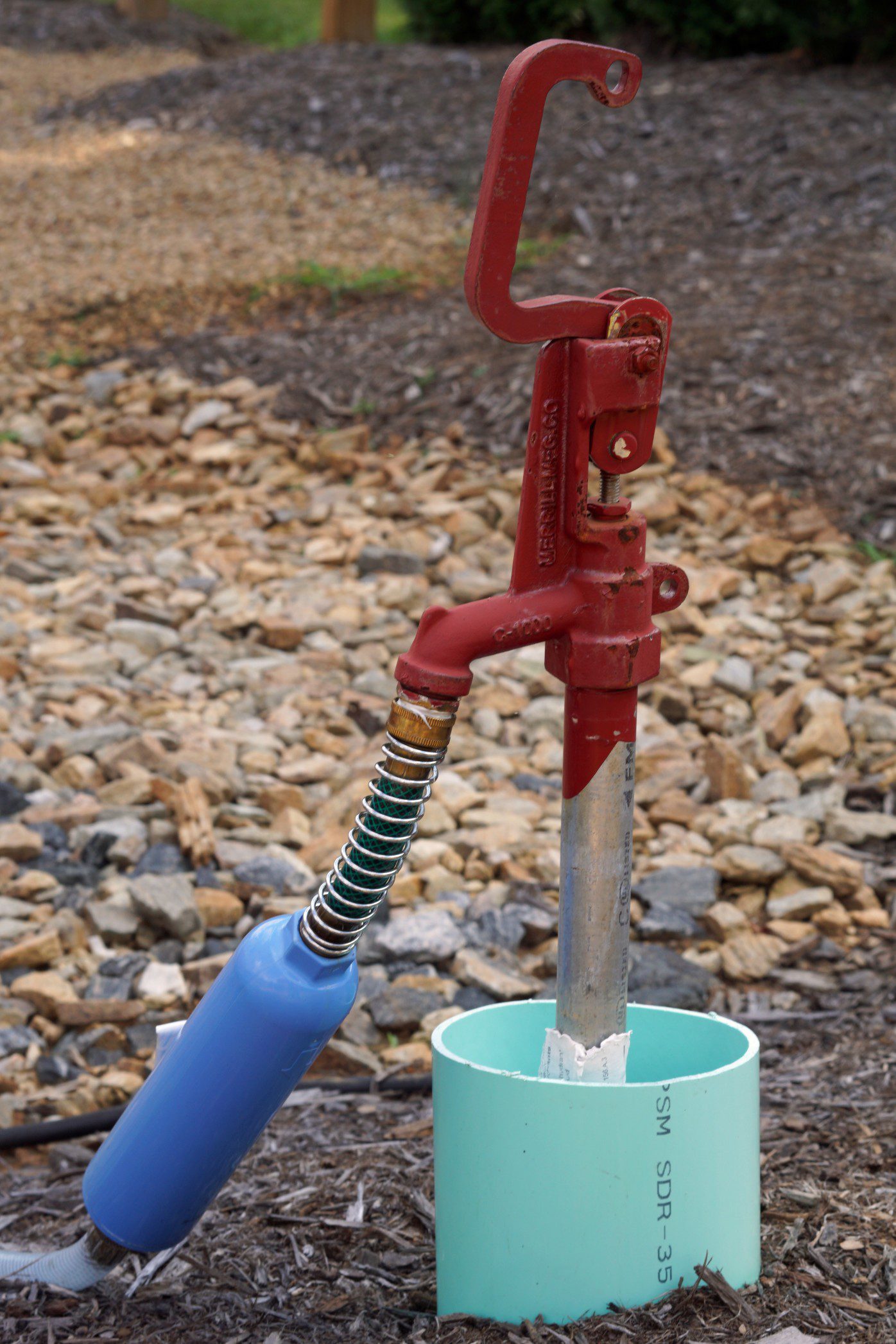
So, we’ve got to be honest. The Camco Taste Pure is our favorite filter for ease of use and price. However, it’s not the only one we use. In the world of RV water filtration, we believe redundancy is key.
Using the Acuva filter as our final method of defense, with the Camco on the frontlines, gives us the best-tasting, cleanest water and, importantly, the most vital peace of mind.
We recommend a multistep filtration process for all RVers who spend significant time traveling across the USA.
The Dangers of Traveling Without a Water Filtration System
Embarking on the open road without a reliable water filtration system is a bit like skydiving without checking your parachute. Sure, you might be fine, but is it worth the risk?
The water quality across the U.S. varies dramatically, and contaminants aren’t always visible to the naked eye.
Health Risks Include:
- Bacterial Infections: E. coli, Salmonella, and other bacteria can cause severe gastrointestinal distress.
- Viral Contaminants: Viruses like norovirus can lead to outbreaks in confined spaces—your RV included.
- Chemical Exposure: Lead, arsenic, and nitrates can have long-term health effects, including neurological damage and increased cancer risk.
- Parasitic Infections: Parasites like Giardia lamblia can turn your dream trip into a nightmare.
Real-World Examples:
- Rural Areas: Often rely on well water, which isn’t subject to EPA regulations and may contain high levels of minerals, nitrates, or bacteria.
- Old Campground Infrastructure: Aging pipes can leach metals into the water or harbor biofilms where bacteria thrive.
- Natural Disaster Zones: Areas recovering from floods or hurricanes may have compromised water systems.
Other Considerations:
- Taste and Odor: Unfiltered water can have unpleasant tastes and smells, making hydration a less enjoyable experience.
- Appliance Damage: Sediment and hard water can shorten the lifespan of your RV’s plumbing fixtures and appliances.
Which RV Water Filter (or Filters) Will You Use?
Water is the essence of life, and when your home is on wheels, ensuring that essence is pure becomes a mobile challenge. Whether you’re a weekend camper or a full-time road warrior like us, investing in a reliable water filtration system is not just about health—it’s about enhancing the quality of your journey.
From the affordable simplicity of the Camco TastePURE to the high-tech assurance of the Acuva UV-LED system, there’s a solution out there that fits your needs and budget. After all, the only surprises we want on the road are the breathtaking vistas around the next bend—not unexpected bouts of stomach unrest.
So here’s to clear water, safe travels, and the peace of mind that comes from knowing every sip is as pure as the adventures that await.
We’ll Help You Find the Best Free Camping in the USA
You should give it a try!
As a matter of fact, these free campsites are yours to enjoy. Every time you pay federal taxes, you’re contributing to these lands.
Become a FREE CAMPING INSIDER and join the 100,000 campers who love to score the best site!
We’ll send you the 50 Best Free Campsites in the USA (one per state). Access the list by submitting your email below:
Great round up. Sean created a DIY 3 phase system with different micron levels to filter bacteria as well. It was about $150 to build.
Link the blog post!
We use the Camco cylinder outside and keep a Brita filter pitcher in the refrigerator. We use the water in pitcher for drinking and fill the coffee pot. We have stayed at RV parks who offer reverse osmosis filtered water dispensers. 25-30 cents a gallon and the water tastes great.
Like zero water , works great and takes chlorine and lots of other stuff, fits in refrigerator
We LOVE our Travel Berkey which is the smaller Berkey version – only 1.5 gallons. We’ve never used a Soda Stream, but we have been talking about it since we drink ridiculous amounts of sparkling water. The cans are getting out of control. Thanks for the recommendation!
I bet thats a great size! We love our Soda Stream. It’s really reduced the waste we produce.
Nice! Thats pretty inexpensive!
We use a Berkey. The best thing about it…. no matter where you are your water always tastes the same.
Ya, IDK guys. I grew up in the Caribbean drinking water from a cistern that was untreated and unfiltered.
We have been full timing for 5 years with a Camco filter that we change every 3 mos. Our drinking water is also filtered with an under sink filter so it is double filtered. But, having lived all over the world and having drunk the water (I DETEST bottled water) I’m really not too concerned unless I’m in an area known to have bad water (Peru at Christmas, Syria several times) where I am careful to boil it.
Then again I’m an inveterate nail biter who has rarely ever been sick in 68 years. My doctor says it’s because I have an incredible immune system.
This is a good list, but I wish there was more information on full house filtration systems, like the 2/3/4 canisters systems. Good and pure drinking water is great, but some areas of the country has such mineral laden content it makes it very difficult for those sensitive to it and it really messes up the RV systems, sinks, toilets and showers.
We use the Big Berkey and love it.True,it does take up counter space but we feel it’s worth it.
When we’re traveling, we just set it in the sink and haven’t had any problems so far.
We absolutely love our Travel Berkey. Yes it takes up space but we have adapted to it. We also use the Camco hose filters to take out the big chunks. Next there is a whole house .5 micron filter that the water goes thru on the way to our tank. And all water for drinking for us and our dog goes thru the Berkey. It always tastes great. With researching what the Berkey filters out I don’t think it can be beat.
Unfortunately your comment regarding fluoride strikes a negative response. Fluoride has been researched and numerous studies have shown the benefit to resisting tooth decay.
Having lived grown up in the US whereby fluoride was in my drinking water, I’ve not had a cavity. In fact when I lived in Europe and visited local dentists, more than once a dentist would gather his colleagues to have them see what the benefit fluoride provided to my teeth. This was particularly true of England, where folks are famed for having notoriously bad teeth.
Don’t knock fluoride.