Before you head out for a hike using Google Maps as a guide, you’ll want to hear the latest warning.
News stories from the last few years prove that navigating the wilderness using the app is a bad idea. As much information as the search and mapping giant has, it still makes mistakes.
Today, we’re exploring the harrowing story of a hiker who discovered their directions included a potentially fatal error.
Let’s take off!
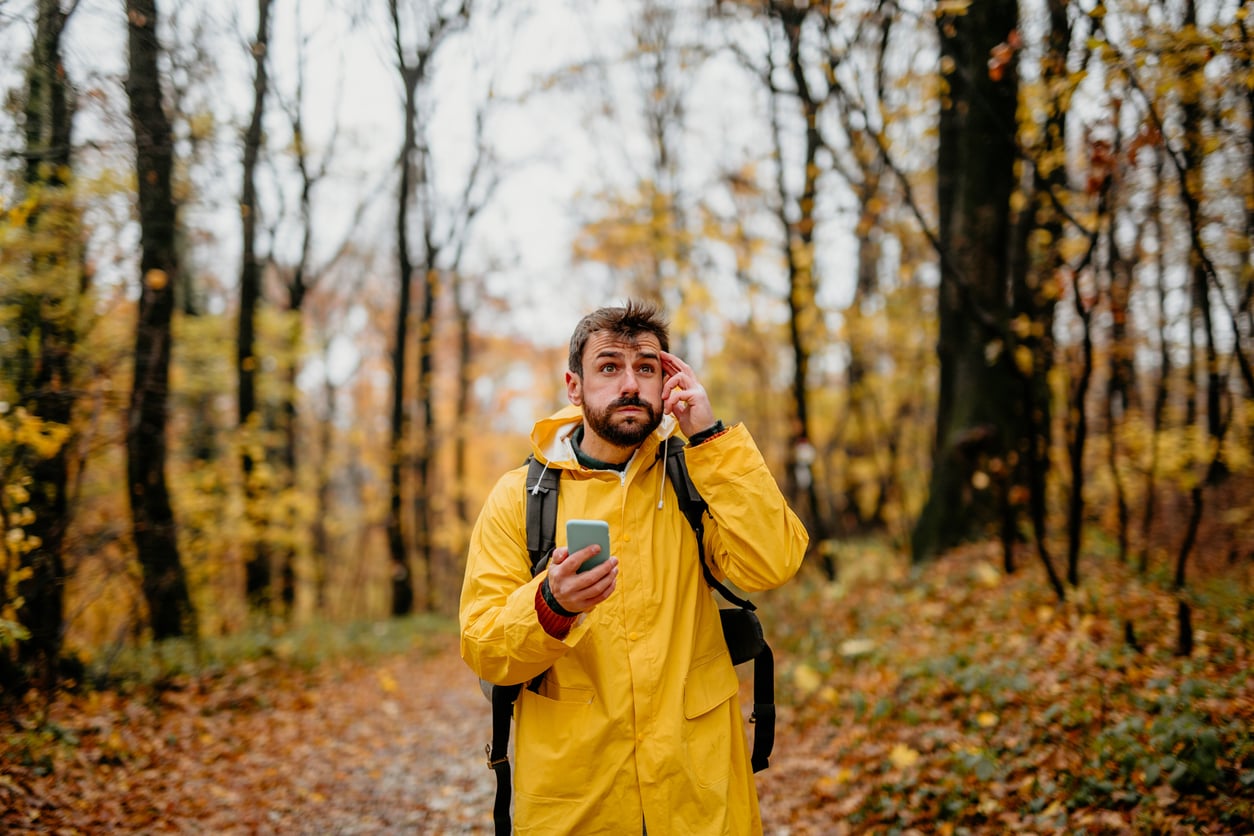
Hiker Rescued After Following Google Maps Fake Trail
In an article in Outdoor Magazine on November 8, 2023, Adam Roy gives us a vital warning about Google Maps. Using the story of a hiker who became hopelessly lost, he reminds us to pay attention to our surroundings.
North Shore Rescue outside of Vancouver, British Columbia, Canada, reported they saved a trapped explorer from the back of Mt. Fromme.
While the unnamed individual swears they were following a route in the treacherous backcountry, none are there. In fact, the steep, cliff-dotted mountainside is notoriously dangerous. Instead of using a recognized trail-mapping tool, they used the popular app to chart their course.
It turns out that this wasn’t the first incident in the same spot involving the error. Another person needed a helicopter bail-out just a few months before. And while there hasn’t been a direct correlation, a third died there in 2021.
After several requests from the rescue team, the media goliath finally removed the rogue path from their map.

Unsurprisingly, this isn’t the only time they’ve come under scrutiny for misguided travel information. The app is responsible for putting many more hikers in precarious positions, sometimes requiring costly retrieval.
It sounds like Google Maps should come with a warning to protect inexperienced hikers. Sadly, no such notice exists.
Purpose-built tools like Gaia, CalTopo, and AllTrails are much more reliable when it comes to the unbeaten path. Even something as simple as a paper map could’ve saved everyone a serious headache.
About Google Maps
Google Maps is a tool that provides detailed information about roads and geographic locations worldwide. You’ve probably seen their data-gathering cars driving every street in a city or satellite views of your old house. Most of us have used the software to investigate the best place to eat near a meeting or see which hotel is closest to the bar.
And for this sort of exploring, there aren’t many programs that do a better job.
But what you probably haven’t seen are their other projects. For popular hiking trails, they send out folks with backpack-mounted cameras. While these highly traveled tracks are usually well-marked and easy to navigate, that’s not always the case.
The company hasn’t had much to say regarding the warning some folks have about Google Maps. In fact, locals don’t recognize many of the paths at all.
So, it might help you find the best ice cream shop near your RV, but if you’re heading into the woods, you’ll need more than the app to guide you.
Is Apple Maps any better? Google Maps Vs. Apple Maps (for Road Trips)
A Warning for Drivers Following the App’s Directions
It’s not just hikers who should listen to this warning about Google Maps. Drivers should, too. Especially when there’s inclement weather or you’re venturing out into public lands, the directions could leave you stranded.
Drivers in the Lake Tahoe region found out the hard way during an epic winter storm in 2021. Over 202 inches of snow fell in the area over two weeks in December that year. Up in the high country, this sort of precipitation leads to road closures. Most vehicles can’t navigate safely under the reported conditions.
The app didn’t consider this information when it sent drivers down sketchy routes. Because the roads aren’t part of a highway system, the CalTrans shutdowns didn’t make it into the algorithm.
As a result, many drivers ended up stuck on unmaintained mountain roads in terrible conditions. And even though they were aware of the issue, the company didn’t have a good solution.
Jalopnik writer Adam Ismail called on the app maker to introduce a “third state” that indicates the route might not be safe. But because they’re committed to always finding a way, they worry it could look like bad business.
For drivers headed into hazardous conditions at night, their failure to alert users has had deadly consequences.
How to Avoid Following Fake Trails on Google Maps
When you go into the backcountry for a hike, you could end up on a fake trail by following Google Maps. If you’re the type that loves technology to a fault, you might put yourself in danger. There are some pretty simple ways to avoid getting burned by faulty directions.
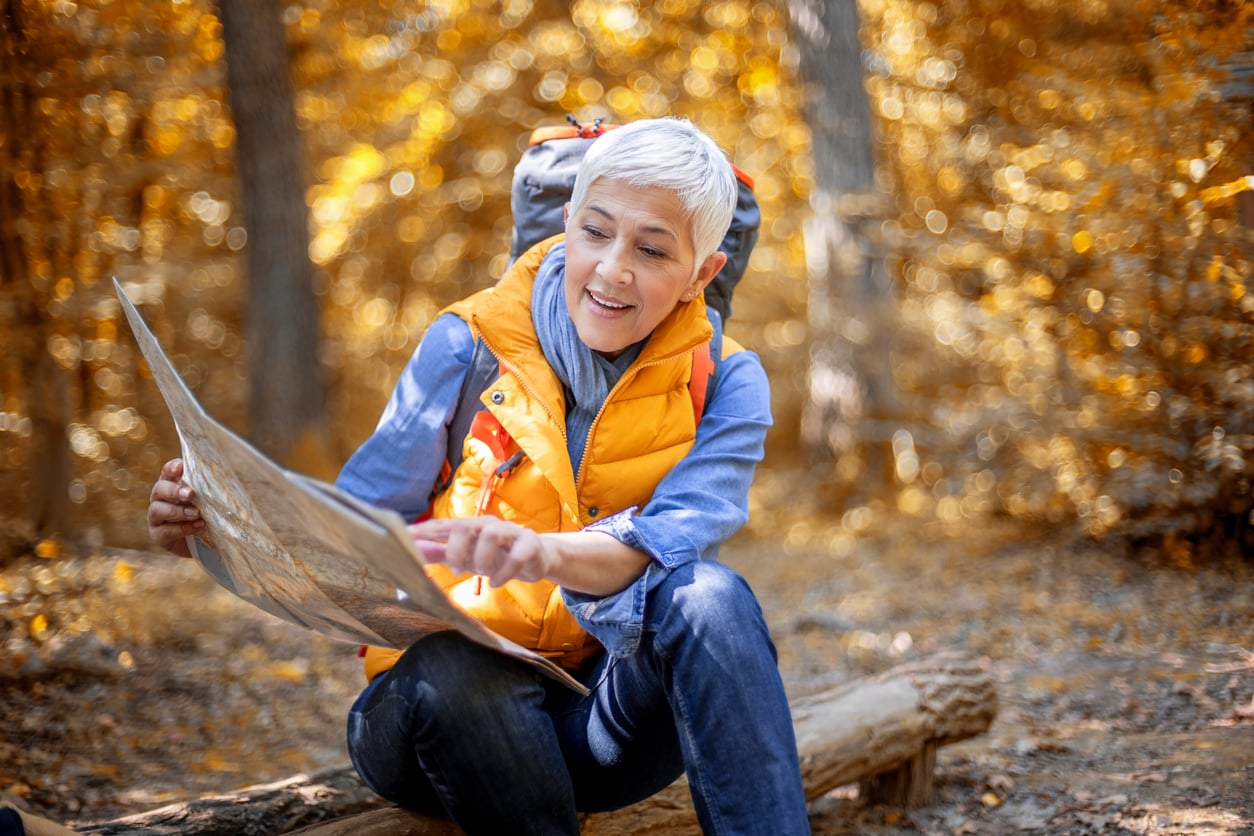
The most straightforward way to keep to the beaten path is to return to basics. Paper maps are a time-honored tradition that adventurers have used for centuries. While they won’t talk to you at each juncture, they’re clear and easy to follow. And before they’re published, the trails are all vetted by experts.
Physical guides also encourage you to engage with your surroundings and pay attention to where you are. With a little experience, you’ll never want to leave the RV without one in your pack. If you prefer an app, make sure you have power backups for your device.
AllTrails has millions of users who all contribute to their database of routes. This app shows you where to find a hike anywhere in the US. Graded by difficulty and elevation, among other things, you can choose your adventure based on feedback. You can also download the map to your device if you’re trekking out of cell tower range.
The free version has over 400,000 maps, so they’ll likely have the one you want.
Gaia GPS includes cycling and hiking paths on their app. They don’t have as many options as AllTrails, but they’re highly detailed. You can record your speed, direction, and climbing elevation when in the program. You can also create your own routes.
However, the most reliable tool is yourself. Get a topographical map of your area and learn how to read it. All you need is a compass and some experience.
Have you committed any of The 7 Deadly Sins of Hiking?
What to Do if You Get Lost Following a Fake Google Trail
If you feel like you might be going down the wrong trail, you can take a few steps to protect yourself. Even though Google Maps doesn’t have a warning, we do. Hiking down a path that disappears or starts to get precarious should tell you you’re not heading in the right direction.
While you might think it’ll get better, it probably won’t. You could put yourself at risk.
Bring a map, safety whistle, and compass with you whenever you venture onto the trailhead – and know how to use them. You may never need them, but they can provide helpful information in a crisis. Always tell someone where you’re going and when you expect to be back. They can notify authorities if you get lost and can’t find your way to safety.
Using GPS as a navigation tool makes you rely on your device more than your senses. Pay attention to your surroundings and landmarks so you can recognize the area. Streams and hills won’t move around on you and can serve as lifelines if you get lost.
Don’t panic if things go wrong. When you realize you’re lost, stop and take some deep breaths. Regularly traveled areas may have other hikers nearby. Use your safety whistle to get their attention.
In the worst-case scenario, stay put. Whoever looks for you will start with your last known location. You could end up miles away, and that makes all the difference.
Learn how to read a map with Wilderness Navigation Made Simple.
Explore the Unknown with a Reliable Source
Google Maps should come with a warning for hikers attempting to navigate through the wilderness. Even though we’re accustomed to trusting the app, it’s unreliable in the backcountry.
We recommend having a paper map and compass to navigate your way out of a dangerous situation. And always tell someone where you’re going. In a crisis, this could help your story have a happy ending!
We’ll Help You Find the Best Free Camping in the USA
You should give it a try!
As a matter of fact, these free campsites are yours to enjoy. Every time you pay federal taxes, you’re contributing to these lands.
Become a FREE CAMPING INSIDER and join the 100,000 campers who love to score the best site!
We’ll send you the 50 Best Free Campsites in the USA (one per state). Access the list by submitting your email below: