Lycorma delicatula, better known as the spotted lanternfly, is both a significant threat to the agriculture industry and the critter behind an unusual type of honey.
So, what’s the deal with this prolific pest?
Join us as we discuss invasive spotted lanternflies and what you can do about them.
Let’s fly!
What the Heck is Spotted Lanternfly Honey?
Back in 2019, beekeepers on the East Coast noticed a change in the flavor of their honey. Additionally, they found that instead of a break in production over summer, their hives kept pumping out a dark, sugary liquid year-round.
DNA testing by Penn State Extension traced the amber-colored honey back to the invasive spotted lanternfly.
Despite the name, the product you may find on grocery store shelves isn’t made by these pervasive creatures. Spotted lanternflies create honeydew, a sweet, sticky substance they release from their abdomens. Bees flock to the smell and feast on the stuff instead of harvesting nectar from flowers. Ultimately, it ends up in their honey reserves.

What Does Spotted Lanternfly Honey Taste Like?
While the appearance of spotted lanternflies led to a boon in honey production, the flavor isn’t for everyone. The substance, which many describe as smokey, bitter, and slightly bacon-y, is certainly more controversial than its sweetly satisfying predecessor.
However, Penn State included it in a blind taste test, and 90% of subjects claimed to either like or love the distinct flavor.
One Philadelphia-based manufacturer is now marketing it as Doom Bloom in a nod to the harmful species. Other culinary creators have used it for hot honey products to complement savory dishes.
Some tests show that spotted lanternfly honey contains more antimicrobial properties than other varieties. This includes the renowned Manuka honey, which comes from bees that harvest pollen from tea tree plants. Penn State and the University of Texas in San Antonio are studying its potential medicinal value.
If you thought spotted lanternfly honey was weird, check out M&M Honey, the Newest Food Fad!
Why is This Species So Problematic?
After hitching a ride from China to the US aboard a shipment of stones in 2014, spotted lanternflies landed in an area with no natural predators. In turn, their population numbers exploded. Initially, sightings were limited to states like Pennsylvania and New Jersey. But they’re now a nationwide menace.
The sweet honeydew they excrete can choke out plants and inhibit photosynthesis. While they prefer to feed on another invasive species, the tree of heaven (Ailanthus altissima), these leafhoppers will suck the juices from grapevines, hops, fruit trees, and about 70 plants altogether.
Effects of the insect’s damage include defoliation, low crop yields, an inability to withstand cold temperatures, and plant death.
Invasive spotted lanternflies pose a significant risk to many agricultural crops, but other industries, such as tourism and forestry, may also see the effects of their growing populations. These pervasive pests are swarming insects. Like their cousins, cicadas, they can desiccate swaths of flora to satiate their ravenous appetites.
Additionally, their honeydew promotes the growth of sooty black mold, a harmful fungus that can decimate fruit crops and interfere with photosynthesis.
Other concerns arise from using pesticides in response to the appearance of these insects.
Farmers and groundskeepers may spray systemic pesticides on foliage or inject them directly into the trees that these creepy-crawlies favor. When bees and other pollinators consume their honeydew, they might also ingest some of the dangerous chemicals meant to kill the invasive creatures.
Spotted lanternflies aren’t the only insects to fear. Here are the Most Dangerous Bugs in the USA!
How to Identify Invasive Spotted Lanternflies
For several years, it seemed as though the influx of these critters was limited to the Northeast. However, that’s no longer the case, as they’ve now appeared in states nationwide. Here’s a guide to spotted lanternfly identification.
Egg Mass
Inconspicuous spotted lanternfly eggs are white, foamy, ½” masses that may appear on firewood, furniture, and other outdoor objects. In fact, you can find them on everything from fabric to lightbulbs.
After the eggs hatch, the remains become a crusty brown patch and remain attached to the substrate.
Nymph Stage
Nymphs usually show up between April and September. When they’re young, they’re between ⅛” and ¼” long with shiny black bodies and white spots. They have a funnel or tube-shaped mouth used to suck the sap from plants.
Their bodies become bright red with black markings and white spots as they mature. They may reach ½” long.
Adult
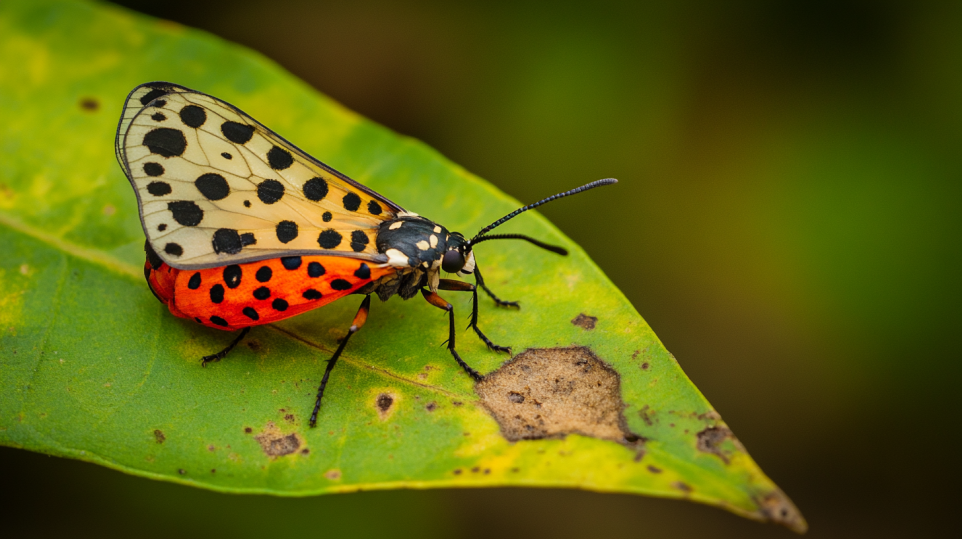
Fully-grown spotted lanternflies have yellow and black abdomens and large brown wings with black spots. When they open these appendages, a pair of bright red forewings with black dots and lines can be seen.
Adults can measure an inch long and half an inch wide. They usually appear between July and December.

What To Do If You Find a Specimen in the Wild
According to Penn State Extension, your response to finding one of these insects will depend on where you see it. If you’re in an area known to harbor invasive spotted lanternflies, the best course of action is to kill the bugs. They can’t harm humans, so you can squash them with your hands. They can jump a significant distance, so you’ll need to be quick.
On the other hand, if you find the specimen in an area without verified sightings of the species, it’s best to collect it. Place it in a vial or other container filled with rubbing alcohol and take it to your local Agricultural Extension Center. At the very least, try to take a picture and record your location to report to officials.
Protect your property with a Non-Toxic Spotted Lanternfly Tree Trap!
Is Spotted Lanternfly Honey Worth It?
Spotted lanternfly honey is a novelty product for many. You can think of it as a way to make lemonade out of nature’s lemons. However, the spread of this invasive species could have far-reaching repercussions for farmers and folks in other industries.
Be sure to report any sightings to your local officials and do your best to kill any spotted lanternflies you see. The bees will thank you!
We’ll Help You Find the Best Free Camping in the USA
You should give it a try!
As a matter of fact, these free campsites are yours to enjoy. Every time you pay federal taxes, you’re contributing to these lands.
Become a FREE CAMPING INSIDER and join the 100,000 campers who love to score the best site!
We’ll send you the 50 Best Free Campsites in the USA (one per state). Access the list by submitting your email below: