So, you’ve finally decided that the open road isn’t complete without the added inconvenience of lugging around a bicycle—or three.
Maybe you’re convinced that after a long day of driving, you’ll have the energy to pedal into the sunset. Or perhaps you just like the idea of your RV looking like a mobile garage sale.
Either way, attaching bikes to your RV is both an art and a science, fraught with choices that could make or break your travel experience—or at least your back window.
Let’s navigate the labyrinth of bike racks so you can make an informed decision and get back to pretending you’ll actually use that mountain bike.
General Overview of Bike Racks and How They Work
Bike racks are the unsung heroes of road trips, enabling you to bring along your two-wheeled freedom machines without cramming them into your living space. Essentially, a bike rack is a device attached to your vehicle designed to hold bicycles securely during transit.
They come in various styles and mounting options, each with its own set of mechanisms for attaching and securing bikes.
The main types of RV bike racks include rear-mounted, front-mounted, ladder-mounted, and roof-mounted racks. Each type employs different methods—like clamps, straps, or trays—to keep your bikes from becoming roadkill or projectiles aimed at the car behind you.
1. Rear-Mounted RV Bike Racks
Product Spotlight: Swagman Traveler XC2 RV Approved Hitch Mount Bike Rack
The Swagman Traveler XC2 is a hitch-mounted rack designed specifically for RVs. It attaches to the rear hitch receiver and can carry up to two bikes. The rack features adjustable wheel hoops and a ratcheting arm to secure bikes of various sizes.
Pros:
- Easy Installation: Slides into a 2-inch hitch receiver with minimal fuss.
- Adjustable: Accommodates different bike sizes and styles.
- RV Approved: Specifically designed to withstand the extra stress at the back of an RV.
- Foldable: Can be folded up when not in use, saving space.
Cons:
- Limited Capacity: Holds only two bikes; families might need more.
- Obstructed Access: May block access to rear compartments or the spare tire.
- Security Concerns: Bikes are exposed and may require additional locks.
Our Take:
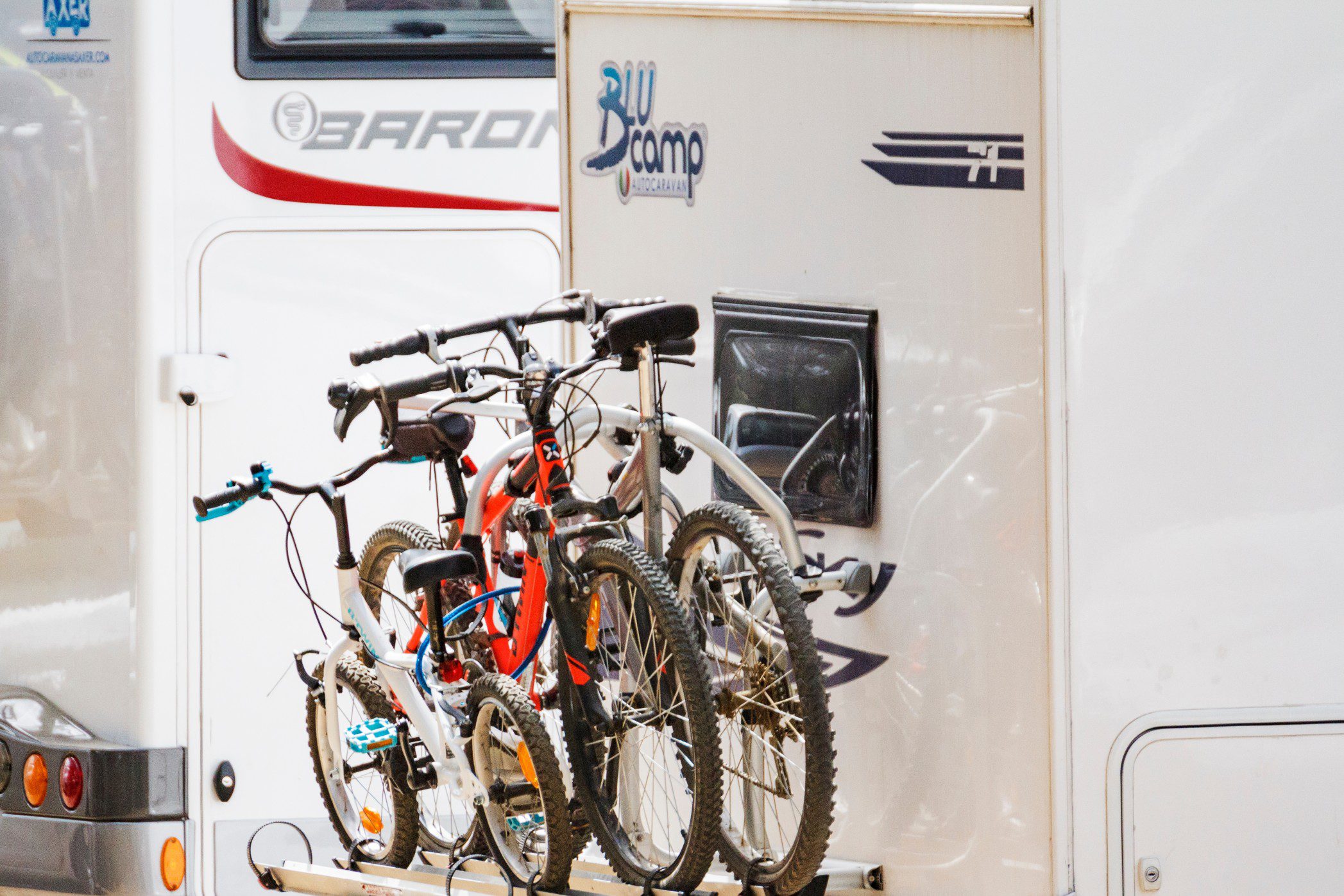
Rear-mounted racks are the most popular choice for a reason—they’re generally easy to use and don’t require a degree in engineering to figure out.
However, they can make your vehicle longer, complicating parking and increasing the risk of forgetting you have bikes attached when backing up. Proceed with caution, especially if spatial awareness isn’t your strong suit.
2. Front-Mounted RV Bike Racks
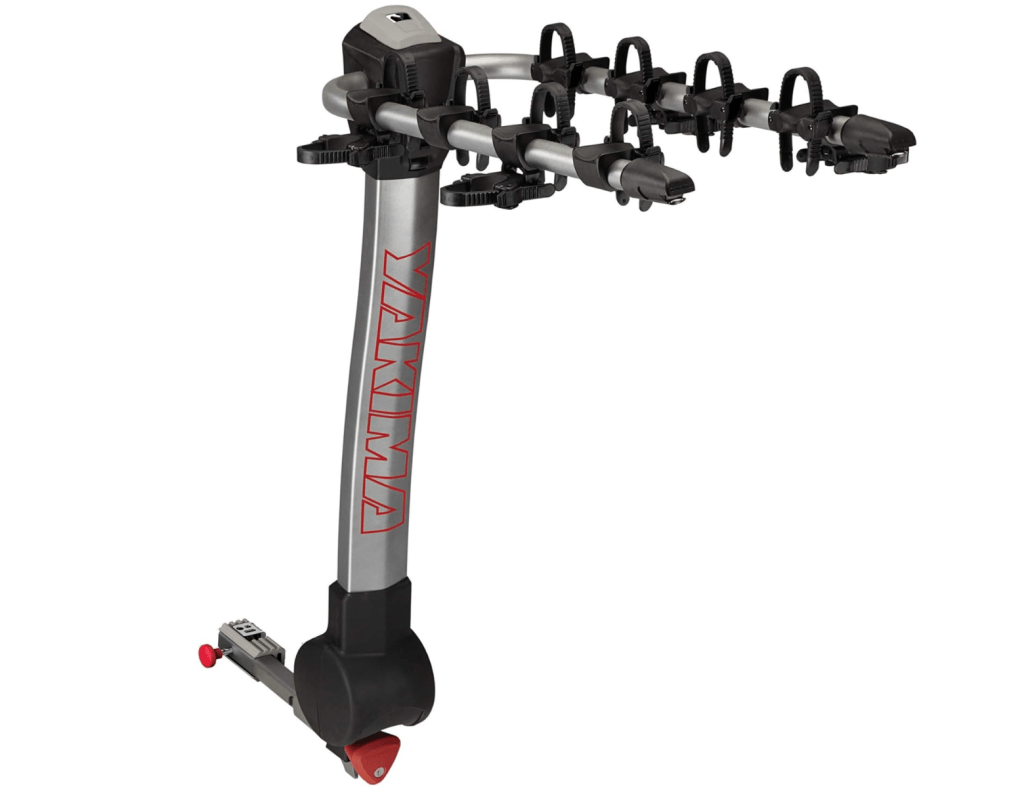
Product Spotlight: Curt Front Mount Hitch Receiver and Yakima FrontLoader Bike Mount
The Curt Front Mount Hitch Receiver allows you to attach accessories like bike racks to the front of your RV. Paired with the Yakima FrontLoader Bike Mount, this setup lets you carry bikes on the front end.
Pros:
- Visibility: You can keep an eye on your bikes while driving.
- Rear Access Unobstructed: Leaves the back of your RV free for other uses.
- Versatility: The front hitch can be used for other accessories.
Cons:
- Installation Complexity: Installing a front hitch can be labor-intensive.
- Legal Restrictions: Some states have regulations about front-mounted items obstructing headlights or license plates.
- Potential for Distraction: Constantly seeing your bikes can be distracting.
Our Take:
Front-mounted racks are a solid option if you’re already using the rear for towing or other accessories. However, they come with their own set of challenges, like installation complexity and potential legal issues. Plus, do you really want bugs smashing into your expensive bike all trip long?
3. Ladder-Mounted RV Bike Racks
Product Spotlight: Stromberg Carlson LA-102 2-Bike Ladder Mount Bike Rack
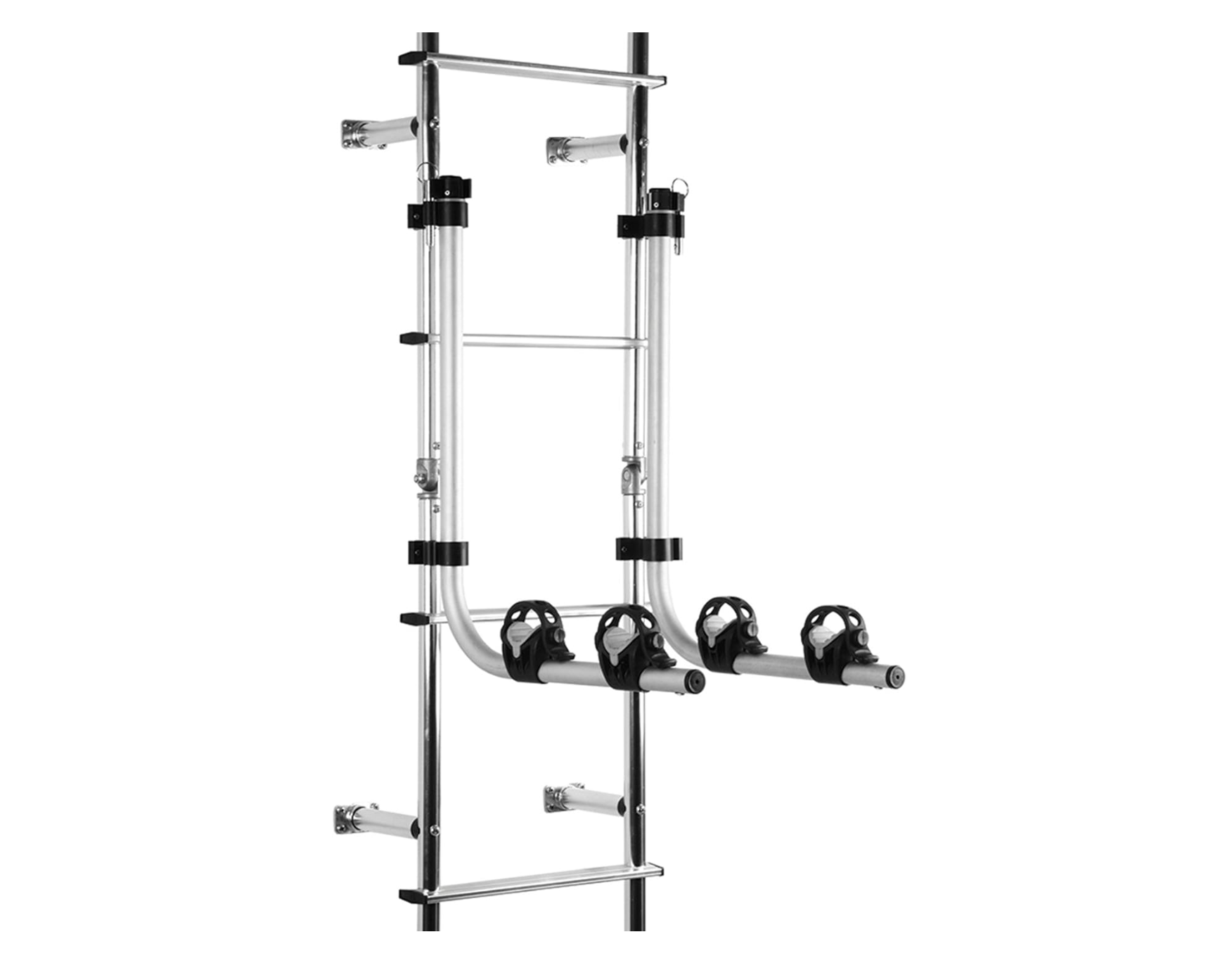
The Stromberg Carlson LA-102 attaches to the existing ladder on the back of your RV. It can carry up to two bikes and folds up when not in use.
Pros:
- Space-Saving: Utilizes existing ladder space, keeping other areas free.
- Cost-Effective: Generally cheaper than other rack types.
- Easy Installation: Attaches directly to the RV ladder with minimal tools.
Cons:
- Limited Capacity: Holds only two bikes.
- Weight Restrictions: Not ideal for heavier bikes like e-bikes.
- Accessibility Issues: Lifting bikes up to the ladder height can be a workout.
- Potential Ladder Damage: Added stress on the ladder could lead to wear or failure.
Our Take:
Ladder-mounted racks are a clever use of space but come with limitations. If you have lightweight bikes and don’t mind a bit of lifting, this could be a viable option. Just make sure your RV’s ladder is sturdy enough to handle the extra weight—or prepare for a rude awakening.
4. Roof-Mounted RV Bike Racks
Product Spotlight: Thule ProRide XT Roof Bike Rack
The Thule ProRide XT is a roof-mounted bike rack that secures bikes upright on the roof of your RV. It’s designed to hold one bike per rack, but multiple racks can be installed side by side if space allows.
Pros:
- Preserves Access: Doesn’t block doors, windows, or compartments.
- Security: Bikes are out of easy reach from potential thieves.
- Versatility: Can be used on other vehicles with roof rails.
Cons:
- Aerodynamics: Increases wind resistance, affecting fuel efficiency.
- Installation Difficulty: Lifting bikes onto the roof is a physical challenge.
- Height Restrictions: May cause clearance issues with low bridges or overhangs.
- Weather Exposure: Bikes are fully exposed to the elements.
Our Take:
Roof-mounted racks are the unsung masochists of bike transportation. Unless you’re a weightlifter or have a step ladder handy, getting bikes onto the roof is no small feat. Factor in the risk of forgetting about low clearances, and this option becomes a calculated risk at best.
Pros and Cons Summary
| Rack Type | Pros | Cons |
|---|---|---|
| Rear-Mounted | Easy to install; adjustable; RV-approved | Limited capacity; may obstruct access; security concerns |
| Front-Mounted | Visibility; rear access free; versatile | Complex installation; legal restrictions; potential distraction |
| Ladder-Mounted | Space-saving; cost-effective; easy install | Limited capacity; weight restrictions; accessibility issues; potential ladder damage |
| Roof-Mounted | Preserves access; security; versatility | Affects aerodynamics; hard to load; height restrictions; weather exposure |
The Verdict: Which Rack Should You Choose?
After weighing the options like a bad philosopher, it’s clear that no single bike rack is perfect—each comes with its own set of compromises that could either mildly inconvenience you or ruin your trip entirely.
Our Pick: Rear-Mounted RV Bike Rack
The rear-mounted hitch rack, specifically the Swagman Traveler XC2, strikes the best balance between convenience and practicality.
It’s relatively easy to install and use, doesn’t require herculean strength to load bikes, and keeps them within a reasonable height off the ground. While it does extend the length of your vehicle and could obstruct rear access, these issues are manageable with a bit of planning.
PRO TIP: Is It Legal to Ride eBikes in National Parks?
Final Thoughts on RV Bike Racks
Attaching bikes to your RV doesn’t have to be an exercise in frustration—or a game of automotive Tetris. By choosing the right type of bike rack for your needs, you can safely and conveniently bring your bikes along for the journey, whether or not you actually end up using them.
Just remember, the open road is unpredictable, and so are the challenges of RV travel. But with the right bike rack, at least you won’t have to worry about your two-wheeled investments turning into roadside debris.
We’ll Help You Find the Best Free Camping in the USA
You should give it a try!
As a matter of fact, these free campsites are yours to enjoy. Every time you pay federal taxes, you’re contributing to these lands.
Become a FREE CAMPING INSIDER and join the 100,000 campers who love to score the best site!
We’ll send you the 50 Best Free Campsites in the USA (one per state). Access the list by submitting your email below: