In the world of recreational vehicle ownership, a growing divide is emerging between those who embrace the lifestyle for adventure and freedom, and a smaller group whose circumstances are forcing stricter rules on everyone.
Homeless individuals living in RVs on public streets have become a flashpoint in many American cities, leading to widespread legislation that cracks down on vehicle dwelling. While these measures aim to address urban blight, sanitation issues, and public safety, they often sweep up middle-class RVers in the process—those everyday
Americans who simply want to travel, camp, or enjoy a weekend getaway without breaking the bank. The result? A shrinking landscape of accessible parking, higher costs, and diminished freedoms for law-abiding RV enthusiasts.
This article uncovers how a minority’s struggles are reshaping the rules for all.
The Rise of Street RV Homelessness: A Symptom of Broader Crises
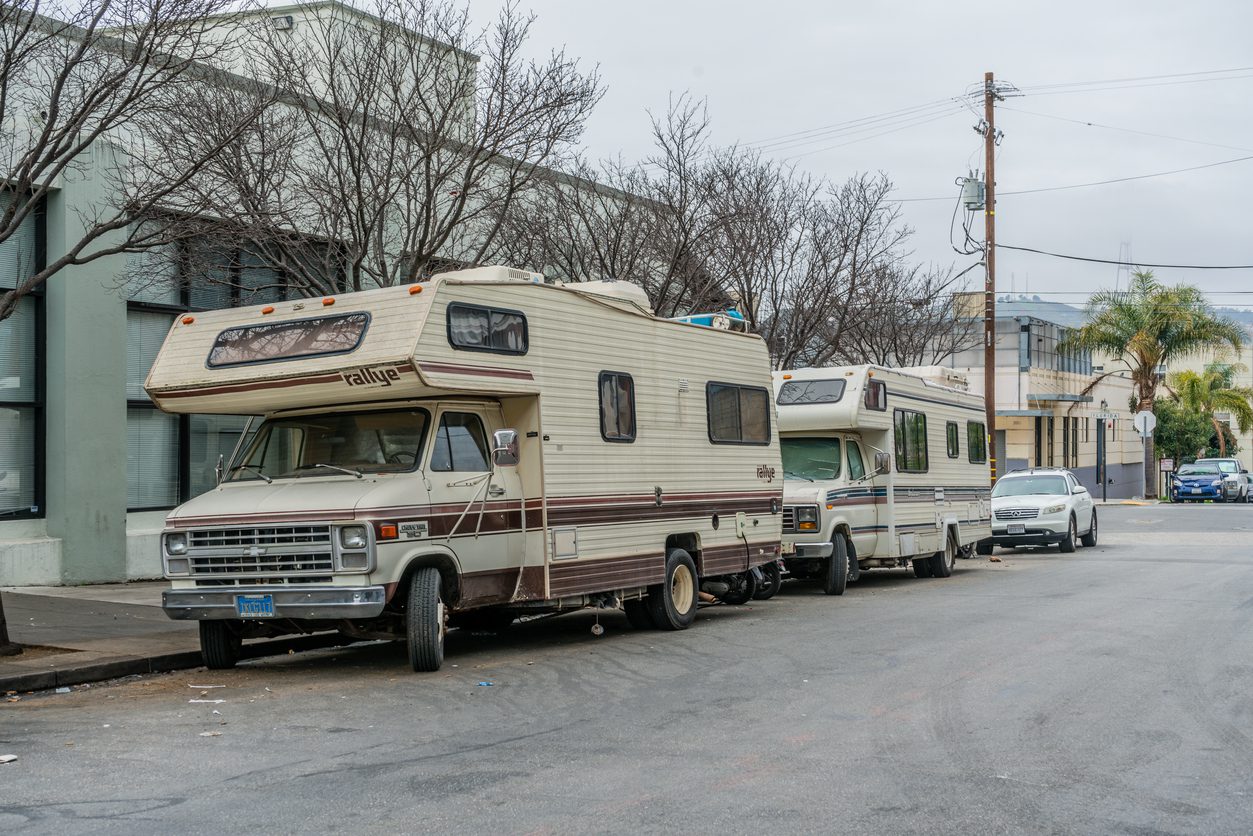
Homelessness in America has evolved beyond tents and sidewalks, with many unhoused individuals turning to vehicles for shelter. RVs, vans, and cars offer a semblance of privacy and protection compared to sleeping rough, but when parked long-term on city streets, they create clusters that resemble makeshift encampments.
In cities like Los Angeles, San Francisco, and Seattle, rows of dilapidated RVs line neighborhoods, often accompanied by accumulating trash, wastewater dumping, and blocked traffic views. These setups aren’t just eyesores; they pose real problems, including fire hazards from makeshift wiring, methamphetamine production in some vehicles, and petty crime that spills into surrounding areas.
This phenomenon, sometimes called “vehicular homelessness,” has surged due to skyrocketing housing costs and economic instability. In San Francisco alone, the number of lived-in vehicles rose from 474 in July 2024 to 612 by June 2025, even as tent counts declined. Many of these residents are recently displaced families or individuals with some income, but they’ve fallen through the cracks of affordable housing.
While sympathetic, their prolonged presence frustrates residents and businesses, who report reduced quality of life and safety concerns. The irony is that these “rolling homeless” groups—often a fraction of the overall homeless population—are prompting responses that affect far more people than intended.
City and State Crackdowns: From Warnings to Widespread Bans
In response, municipalities and states are enacting tough legislation to clear streets of these encampments. A pivotal moment came in June 2024 when the U.S. Supreme Court ruled that cities can punish people for sleeping in public spaces, even without available shelters, overturning prior protections. This greenlit a wave of ordinances specifically targeting vehicle dwellers.
San Francisco led the charge in 2025 with a citywide ban on RVs and large vehicles parking for more than two hours on any public street, effectively outlawing long-term RV living. Mayor Daniel Lurie signed the bill, emphasizing that streets are not RV parks and that the measure addresses sanitation and safety issues.
Registered RV residents as of May 2025 get temporary exemptions if they accept housing offers, but enforcement includes tows and fines for others.
Nearby, San Jose launched a pilot program towing oversized and lived-in vehicles from designated “tow-away zones,” removing 19 RVs and 45 other vehicles since January 2025. The city offers $2,000 buyouts for some RVs to encourage indoor housing transitions, but many vehicles return post-enforcement. Smaller cities like Menlo Park and Carlsbad have followed suit: Menlo Park banned overnight RV parking citywide in February 2025, while Carlsbad expanded its camping ban in March to include sleeping in vehicles, with escalating fines up to $500.
At the state level, California’s Assembly Bill 630, advancing in 2025, would streamline RV disposal for cities, and Florida’s 2025 law bans public sleeping or camping, allowing lawsuits against non-compliant municipalities.
Over 100 U.S. localities banned outdoor sleeping in 2024 alone, with many extending to vehicles. These laws often start with warnings but escalate to tows, where owners lose their homes if they can’t pay fees—exacerbating the cycle.
The Ripple Effect: How Middle-Class RVers Pay the Price
While these bans target homelessness, they don’t discriminate between a rundown RV encampment and a family’s well-maintained camper on a road trip. Middle-class Americans—teachers, retirees, and remote workers who RV for leisure or lifestyle—are bearing the brunt through restricted access, higher expenses, and eroded freedoms.
Once-reliable overnight spots like Walmart, Cracker Barrel, and Cabela’s lots are vanishing due to city ordinances pressured by homeless-related complaints. For instance, Cracker Barrel locations have banned RV parking in response to local rules, not business policy, leaving travelers scrambling.
Boondocking on public lands or rest areas is tightening too; states like Georgia and Indiana limit or prohibit RV overnights, while urban areas enforce no-parking zones that apply universally.
The financial hit is real.
With fewer free or low-cost options, RVers turn to paid campgrounds, where fees are rising amid demand. National parks under potential policy shifts could see higher entrance and camping costs, plus staff shortages closing sites.
Digital nomads and full-time RVers face “homeless” labels in some jurisdictions, complicating banking, insurance, and vehicle registration. In Los Angeles, studies for widespread RV bans cite encampments but restrict all, turning streets into no-go zones for vacationers.
Neighborhood opposition to new RV parks, equating them with street dwellers, stalls development, worsening site shortages. As one expert notes, this “rolling homeless” influx degrades public perception of RVing, making it harder for middle-class owners to enjoy without stigma or fines. The freedom to hit the road is slipping away, replaced by constant relocation and planning hassles.
Finding Balance: Solutions Beyond Bans
The truth is stark: A few struggling in RVs are prompting rules that ruin the experience for many. Cities need to tackle root causes like housing shortages through safe parking programs—proven to transition 70% of participants to stable homes—rather than blanket prohibitions.
Middle-class RVers shouldn’t suffer for societal failures. Until balanced approaches emerge, the open road feels a little less open for everyone.
We’ll Help You Find the Best Free Camping in the USA
You should give it a try!
As a matter of fact, these free campsites are yours to enjoy. Every time you pay federal taxes, you’re contributing to these lands.
Become a FREE CAMPING INSIDER and join the 100,000 campers who love to score the best site!
We’ll send you the 50 Best Free Campsites in the USA (one per state). Access the list by submitting your email below: