Hello, friend. Whether you’re already living the RV life, scrolling through van-life feeds with a quiet longing, or just someone who appreciates the pull of the open road, this essay is for you. There’s something undeniably compelling about a teacher who never owned property, never built an institution, and spent his days walking dusty paths, eating with strangers, and meeting people exactly where they were.
That lifestyle feels refreshingly human—rooted in presence, simplicity, and connection rather than power or permanence.
And it looks a lot like what draws so many people to full-time RVing today.
In this piece, we’ll explore that overlap honestly and respectfully: how the freedom, mobility, and relational rhythm of life on wheels can mirror the spirit of Jesus’ journey. Think of this as a curious traveler’s reflection—one that honors the beauty in his story.
A Life Unattached: Jesus as the Original Nomad
One of the first things that stands out about Jesus is how unattached he was to place and possessions. He didn’t settle down, buy land, or construct a headquarters. Instead, he wandered—Galilee to Judea, villages to wilderness, always on foot or borrowed donkey. He described his reality plainly: foxes have dens and birds have nests, but he had no fixed place to lay his head.
This is radical minimalism in action. Jesus carried no excess baggage—physical or otherwise. His “home” was wherever he found himself at day’s end: a friend’s guest room, a hillside under the stars, or a boat on the lake.
There’s a quiet freedom in that, a refusal to let roots or routines define identity.
RV living echoes this in a very tangible way. When you sell the house, downsize into a rig, and make the highway your address, you’re choosing the same kind of rootlessness—not out of necessity, but often out of deliberate intention.
Many full-timers talk about the liberation of owning less: no mortgage, no endless upkeep, no accumulation of things that quietly accumulate you. There’s a parallel here to Jesus’ lifestyle. Both say, in their own way, “My security isn’t in square footage or storage units.”
And just like Jesus, RVers discover that mobility opens doors.
New places bring new faces. A conversation at a laundromat in Arizona might shift someone’s perspective as profoundly as Jesus’ chat with the woman at the Samaritan well shifted hers. The road has a way of interrupting our scripts and inviting real presence—something Jesus seemed to master.
The Road as Teacher: Learning Through Experience
Jesus didn’t run a classroom or publish books. He taught on the move, drawing lessons from whatever was at hand: a farmer sowing seed, children playing in the marketplace, a fig tree by the roadside. His parables were grounded in the ordinary sights and sounds of travel.
There’s something deeply human about experiential learning, and the RV life is steeped in it.
Every mile brings a new classroom: geology lessons in canyon layers, history in small-town museums, biology in migrating birds overhead. Families who RV with kids often say their children learn more on the road than they ever did in school buildings—much like the disciples learning while literally walking alongside their teacher.
Even for adults, the road teaches resilience and adaptability.
Weather changes plans, mechanical issues arise, budgets tighten. You learn to roll with it. The process looks similar: surrendering the illusion of total control and discovering you’re okay anyway.
This kind of learning isn’t abstract or confined to schedules. It’s immediate and immersive. A sudden storm teaches patience; a breathtaking vista teaches wonder; helping a fellow traveler with a breakdown teaches generosity. These are the everyday moments that shape character, just as the daily walks and shared meals shaped those who traveled with Jesus.
Hospitality and Strangers: The Heart of the Journey
Perhaps the most universally admirable part of Jesus’ story is how readily he shared meals and conversation with anyone. Tax collectors, outsiders, skeptics—he ate with them all. He seemed to believe that real connection happened around tables (or wells, or campfires), not in formal settings.
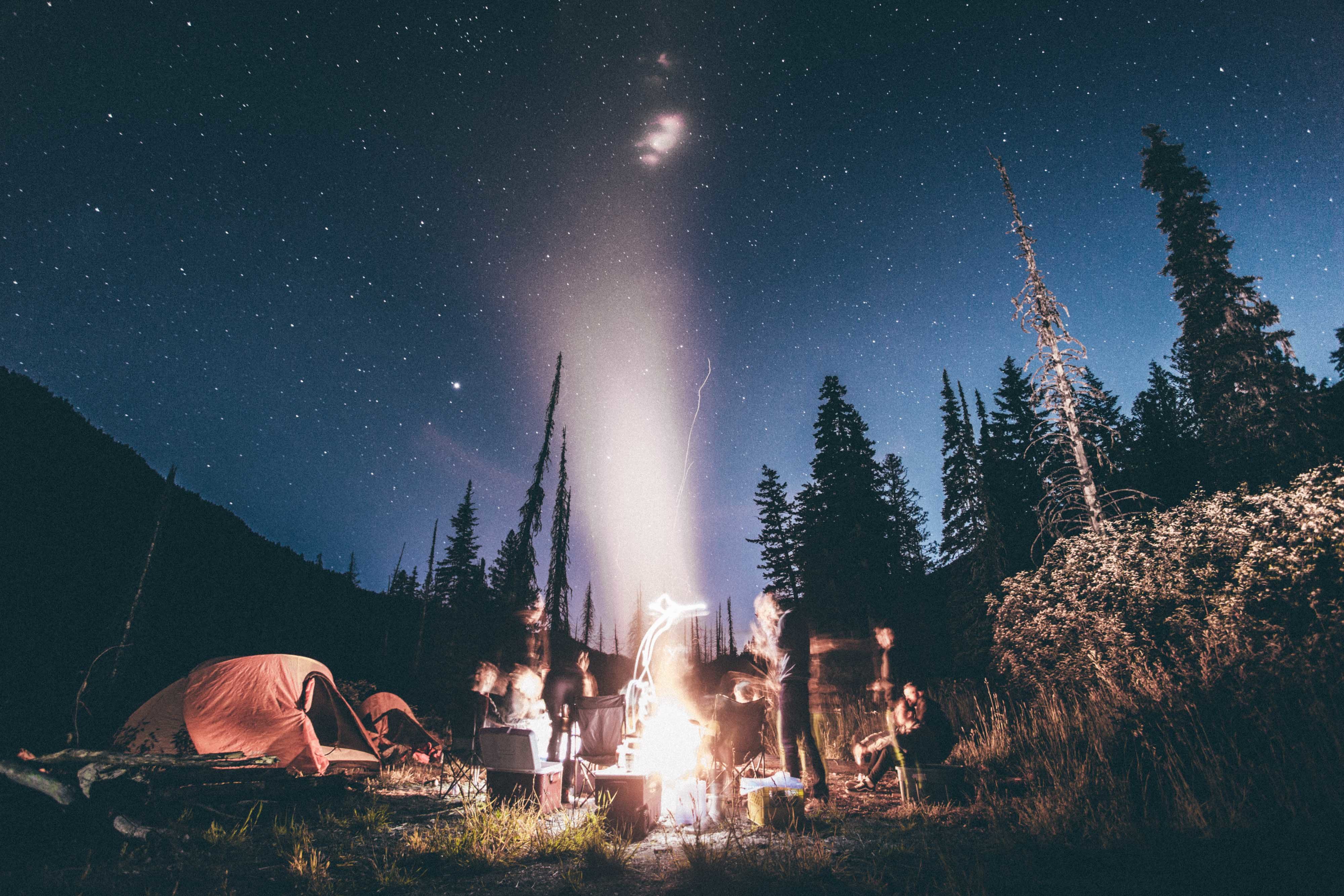
RV campgrounds and boondocking spots recreate this dynamic naturally. People gather around picnic tables or fire rings, swapping stories about routes taken and lessons learned. Someone offers help hooking up a trailer; another shares fresh-caught fish or a spare propane tank.
Barriers drop quickly when everyone is temporarily unrooted.
RVers often describe moments of profound connection with complete strangers—conversations that went deeper in one evening than years of small talk back home. There’s a vulnerability in transience: you know you may never see these people again, so pretense falls away.
In that space, listening happens. Empathy flows. Sometimes healing begins.
This feels very close to what Jesus was doing when he accepted dinner invitations from people society had written off. He didn’t require them to clean up their act first; he met them in their mess. RV life, by putting us regularly in the path of strangers, creates countless small opportunities to practice the same kind of open-hearted presence.
These encounters aren’t planned or programmed.
They arise organically, the way life on the road—and apparently Jesus’ life—tends to unfold. No membership required, no dress code, no scheduled start time. Just people showing up as they are, offering what they have.
Simplicity as Clarity
One of the most appealing aspects of Jesus’ life is its simplicity. No elaborate wardrobe, no political campaign, no building program. He traveled light and stayed focused on people.
Downsizing into an RV forces the same clarity.
You literally cannot keep everything, so you choose what truly matters. Many RVers report that letting go of possessions didn’t create emptiness—it created space. Space for stargazing instead of scrolling. Space for long conversations instead of chores. Space for reflection instead of distraction.
This kind of simplicity isn’t deprivation; it’s liberation.
With fewer things to manage, maintain, and worry about, attention turns outward—to the landscape rolling by, to the person sitting across the campfire, to the quiet inner voice that gets drowned out in busier lives.
Minimalism and time in nature are known to reduce stress and increase well-being. But long before those ideas became popular, Jesus seemed to understand that fewer distractions meant clearer vision—for compassion, for purpose, for joy in ordinary moments.
Community Without Walls
Jesus didn’t leave behind a cathedral or a corporate structure. He left a network of relationships—people who had walked with him, eaten with him, argued with him, and been changed by him. That network spread organically, person to person, home to home.
RVing creates similar fluid communities.
Online forums, rallies, and impromptu gatherings connect people who might otherwise never meet. These connections often feel more authentic than many fixed-location social circles because they’re chosen, not inherited.
You camp next to someone because you both love the same forest or coastline, not because you bought houses on the same street.
In a broader sense, the RV movement itself is a quiet pushback against the idea that bigger and more permanent is always better. It favors experiences over edifices, relationships over real estate.
Community forms around shared journeys rather than shared addresses.
These transient gatherings can be surprisingly deep. People open up quickly when they sense the temporary nature of the connection. Advice is freely given, stories freely told, help freely offered.
It’s a reminder that belonging doesn’t always require permanence—it can emerge in moments of genuine presence.
A Gentle Rebellion Against Empire
Jesus operated on the margins—outside the centers of religious and political power. He critiqued the grand temple system of his day and pointed instead to a different kind of way: small, servant-hearted, scattered among ordinary lives.
There’s an undeniable anti-imperial thread running through his story. He didn’t build monuments or consolidate authority. He dispersed it.
RVing carries a similar spirit of quiet nonconformity.
In a culture that measures success by square footage and stock portfolios, choosing to live in 200–400 movable square feet is its own kind of statement. It’s not usually loud activism—just people opting out of the default script and discovering they don’t miss most of what they left behind.
Many RVers describe feeling freer, more themselves, less burdened. The road becomes a path toward what matters most: presence, connection, wonder. Daily life aligns more closely with values than with societal expectations.
This isn’t about rejecting society entirely—it’s about reordering priorities. Work often continues (remotely), bills get paid, relationships are maintained.
But the center shifts from accumulation and status to experience and relationship.
In that sense, rolling free isn’t just a lifestyle—it’s a way of walking wisely through the world, much like the wandering teacher from long ago. His path was never about building something grand and permanent. It was about being fully present on the journey, open to whoever crossed it, trusting that the road itself would provide what was needed.
Whether you see that path as sacred or simply deeply human, there’s wisdom in it. And for those who choose life on wheels, the echo feels unmistakable.
We’ll Help You Find the Best Free Camping in the USA
You should give it a try!
As a matter of fact, these free campsites are yours to enjoy. Every time you pay federal taxes, you’re contributing to these lands.
Become a FREE CAMPING INSIDER and join the 100,000 campers who love to score the best site!
We’ll send you the 50 Best Free Campsites in the USA (one per state). Access the list by submitting your email below: