RVing in Canada might be exactly what you need to reignite your love for the great outdoors.
While we can’t imagine hitting every great camping spot in the US, we can certainly understand the desire to explore a different country.
Today, we’re bringing you a beginner’s guide to exploring the Great White North.
Let’s get into it!
Why You Should Experience RVing in Canada
If you’re accustomed to RVing around the United States, you’ve probably considered crossing the northern border to see what Canada is all about. And there are tons of great reasons to make the journey.
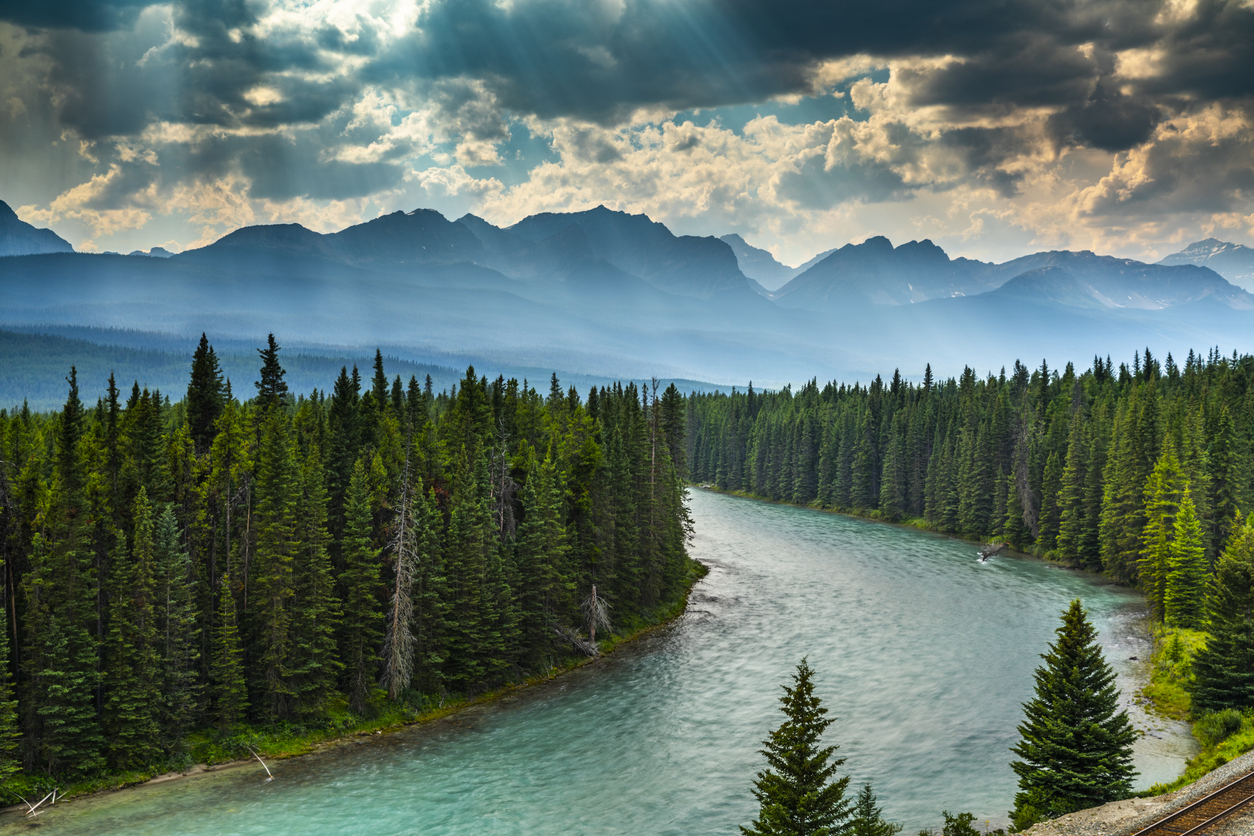
For starters, the scenery is stunning. You’ll find just about every landscape imaginable. Rugged coastlines, towering mountains, and temperate rainforests dominate the environment. Depending on where you choose to explore, you might see twinkling glaciers, crystal-blue lakes, or vast fields of wildflowers. It’s safe to say the sights won’t disappoint.

This also means you can enjoy all your favorite recreational activities. Whether you want to hike through emerald forests, kayak down adrenaline-spiking rapids, or do some cross-country skiing, there’s a place for you.
The Great White North also has thriving metropolitan cities with incredible cultural resources. World-class museums, public art installations, and vibrant music scenes are common in places like Vancouver and Montreal.
5 Tips to Know for RVing in Canada
Before you pack up the camper to go RVing through Canada, you might want a little guidance. After all, crossing international borders can be stressful. Here are five of our top tips to consider.
#1 Plan Ahead
Although many of us enjoy traveling without hard deadlines, you’ll want to do a bit of planning prior to taking off across the border. You don’t have to make reservations for every single night, but it’s wise to put together an itinerary ahead of time, whether you plan to boondock or post up in established campgrounds.
Phone service will likely be spotty once you get out into the backcountry. It’s important to research your camping destinations beforehand. Some apps let you download maps to navigate without a cell signal.
Be aware that many campgrounds and gated public lands are seasonal. While much of the US has mild temperatures year-round, we can’t say the same for our northern neighbors. RVing is nearly impossible in most parts of Canada during the frigid winter months.
That’s another reason to plan accordingly. You don’t want to find yourself out in the cold because you failed to do your research.
Much like national parks in the US, Canada’s public lands can fill up in the blink of an eye. This is especially true during peak vacation times from summer to early fall. Consider planning your trip for the shoulder season instead.
Start by creating a Parks Canada account, which allows you to use their online system to search for campsites in national parks and make reservations. You’ll see just how quickly eager travelers snatch up these spots.
Pro Tip: Visit the Parks Canada website to purchase your passes in advance.
#2 Be Prepared for the Border Entry Station
Crossing the border comes with its own set of stressors. If you’re RVing into Canada, you’ll want to have all your ducks in a row before you hit the road.
First, get all your documentation together. You’ll need your driver’s license, vehicle registration, and proof of insurance. Registration and insurance are also necessary for any additional vehicle, boat, or travel trailer you’re bringing along.
Everyone in your party must have appropriate identification. For most folks, this is a valid passport. Even pets need proof of current rabies vaccination, so take Fido to the vet and ensure your furry friend is up-to-date on all shots.

Be prepared to answer a few questions. Officials might ask why you’re traveling into the country and how long you plan to stay. They may also do a quick walk-through of your rig. We know these interactions can make some people uneasy. Just remember that they’re doing their jobs and that you’re not doing anything wrong.
To save time at the border, use the Canadian government’s ArriveCan program to submit an advanced declaration. This allows you to confirm your identity 72 hours in advance, so you don’t lose precious daylight waiting in line.
Where NOT to cross the border: 5 Worst Canadian Border Crossings for US Citizens
#3 Don’t Bring Prohibited Items When RVing in Canada
While we’re on the subject of border crossings, it’s worth mentioning that you shouldn’t bring any prohibited items. This is a no-brainer for most folks, but many things could land you in hot water.
The hard-line prohibited list includes firearms and ammunition of any kind, as well as fireworks and other explosives. You also can’t bring in firewood, as it can harbor pesky insects. And, of course, illegal drugs are a no-go.
Other items fall into a grey area. For example, some common houseplants are banned due to their invasive nature. Border control might confiscate any suspicious species.
Substances like alcohol and tobacco are allowed in limited quantities. You can bring in two bottles of wine and a case of beer, but don’t stock up for your entire trip and expect to get it all through. Food, especially dairy products, may also get thrown out.
Finally, certain prescription medications have a different status in Canada. If you take a controlled substance, you must ensure you have proper documentation and may need to limit the amount you’re carrying. It’s not a bad idea to get an official note from your doctor, as well.
Not all RVs are made in Indiana! The Best Canadian-Made RV Campers
#4 Take Advantage of Free Camping Opportunities
Seasoned explorers already know how expensive campgrounds can be. That’s one reason folks love boondocking on public lands. It’s also a great way to experience spectacular remote locations. But it isn’t for the faint of heart. You’ll want to be prepared for foul weather and have everything you might need before getting too far from civilization.
In the States, it’s easy to wander from place to place, dry camping on BLM land between destinations. However, it’s a little different when RVing in Canada. A lot of their public property isn’t vehicle-accessible.
Also called Crown land, government property in the Great White North can be hard to traverse in a big rig. Even when you can reach these spots, you’ll need a permit unless you’re a Canadian citizen.
Of course, you can usually find a big-box store or a truck stop to catch some shut-eye. But where’s the fun in that? Great free camping is out there. You just have to know where to look.
Instead of winging it, search websites like Campendium, iOverlander, and Backroad Mapbooks to discover backcountry spots reviewed by other explorers. Many recreational sites and trails have isolated places to boondock. Additionally, national parks may have remote locations for dry camping. You’ll need a pass to enter, but you should be able to overnight at no additional cost.
Each area is different, so the websites we listed above are invaluable when it comes to finding free places to camp.
#5 Know the Rules of the Road
You might think that driving in Canada is the same as driving in the US, but several differences are worth noting.
The first distinction is that cell phone use is strictly prohibited on the road. Individual states mandate these restrictions south of the border, but the law is nationwide in the Great White North.
Next, you’ll notice that street signage changes as you travel between provinces. You’ll want to look up a list of symbols in each area you plan to visit. If you go to Quebec, prepare to brush up on your French, as it’s the region’s official language.
When your RVing adventure begins at Canada’s border, change any digital speedometers to metric. All speed limit signs will be in kilometers per hour.
Each year, the temperature may vary by a whopping 140 degrees Fahrenheit. That means potholes are incredibly common, and roadwork is a part of life. Drive slowly and use caution. You’ll also need to watch out for large animals like moose that occasionally wander into the road.
Overall, driving in both countries is pretty similar, but even the smallest variance can make a massive difference at high speeds.
Start making your plans with Lonely Planet Canada.
Is RVing in Canada Worth It?
For folks in the US, RVing in Canada opens up a whole new world of possibilities. When you’re not constrained by international borders, the world is your oyster.
We highly recommend grabbing your passport and packing your longjohns for the trip of a lifetime. Plan your itinerary and write down all your bucket-list destinations. Then buckle up and hit the road!
We’ll Help You Find the Best Free Camping in the USA
You should give it a try!
As a matter of fact, these free campsites are yours to enjoy. Every time you pay federal taxes, you’re contributing to these lands.
Become a FREE CAMPING INSIDER and join the 100,000 campers who love to score the best site!
We’ll send you the 50 Best Free Campsites in the USA (one per state). Access the list by submitting your email below: