The sadness of discontinued RVs…Do you know that feeling when your favorite band announces an indefinite hiatus right after dropping their magnum opus? That’s how I feel about certain RVs that have been unceremoniously yanked off the production line.
On RV dealership lots overflowing with cookie-cutter motorhomes and trailers, these discontinued gems were the rebels, the trailblazers, the ones that made you actually consider selling your possessions and hitting the open road.
So, let’s take a moment to mourn—and shamelessly demand the revival of—seven RVs and manufacturers that need to make a comeback, like, yesterday.
Why Do RVs Get Discontinued?
Before we dive into this nostalgic trip, let’s address the elephant in the campground: Why do RVs get discontinued in the first place? Is it a grand conspiracy orchestrated by tent manufacturers? Did someone at corporate HQ decide that fun was no longer on-brand?
Well, the reasons are less thrilling but equally maddening. Often, it’s due to financial woes, shifts in market demand, or the ever-mysterious “corporate restructuring.” Sometimes, a parent company swallows a smaller, innovative brand and promptly shelves its unique offerings in favor of mass-produced mediocrity.
Other times, production costs soar, making it economically unfeasible to continue. And let’s not forget regulatory changes that can render a design obsolete overnight.
In any case, the result is the same: we, the RV fans, are left pining for what once was, scouring used listings like they’re rare vinyl records. But enough dwelling on the why; let’s get into the who and the what.
7 Discontinued RVs and Manufacturers That Need To Come Back…Like, Today
1. Airstream Nest
The Airstream Nest—a modernist’s fever dream wrapped in a sleek fiberglass shell. When Airstream unveiled the Nest in 2018, it was as if they finally acknowledged that not all of us are retirees looking to traverse Route 66 in a polished aluminum tube.
The Allure
The Nest was compact yet chic, boasting a minimalist design that felt more Soho loft than mobile home. With its panoramic windows and airy interior, it was the Instagram influencer’s backdrop of choice. It catered to a younger demographic who wanted all the functionality of an Airstream without the hefty towing requirements.
The Demise
But just as quickly as it arrived, the Nest was discontinued in 2020. Airstream claimed it was to “refocus on our core products,” which is corporate speak for “it didn’t make us rich fast enough.” Honestly, it’s a travesty.
The Nest represented a bold step into the future for Airstream, and pulling the plug felt like a retreat into safe, old habits.
The Comeback We Need
Reintroduce the Nest with some tweaks—perhaps solar panels or an even more sustainable build—and watch a new generation of nomads flock to dealerships. Come on, Airstream, don’t be the guy who brings an acoustic guitar to a party and refuses to play the hits.

2. Born Free Motorcoach
Born Free wasn’t just a brand; it was a declaration. These motorhomes were the epitome of craftsmanship, boasting solid wood cabinetry and a commitment to safety that would make a Volvo blush.
The Allure
Hand-built in Iowa, each Born Free motorcoach was a labor of love. They featured roll bars for added safety—a rarity in the RV world—and an attention to detail that made you feel like you were driving a bespoke suit on wheels. They were the choice for those who wanted reliability without sacrificing comfort.
The Demise
In 2017, Born Free ceased production, citing financial difficulties. It’s a familiar tune: a small, quality-focused manufacturer gets squeezed out by giants churning out generic, plastic-lined behemoths. The RV community felt the loss deeply, akin to an indie band calling it quits after their breakout album.
The Comeback We Need
A resurrection of Born Free would be a win for quality over quantity. Imagine these coaches updated with modern tech—solar power, smart home integration—while retaining their handcrafted charm. It’s the revival tour we deserve.

3. GMC MotorHomes
Roll back to the 1970s when bell-bottoms were wide, and so were America’s automotive ambitions. Enter the GMC MotorHome—a front-wheel-drive, aerodynamic marvel that looked like it drove straight out of a sci-fi film.
The Allure
The GMC MotorHome was revolutionary. Its low profile and sleek design set it apart from the boxy competitors of its time. With an aluminum and fiberglass body and a ride smoother than a yacht on calm seas, it quickly garnered a cult following.
Plus, it was the star of its own movie, “Stripes,” proving it had Hollywood appeal.
The Demise
Production ceased in 1978 due to GM’s reassessment of its priorities during an economic downturn. Translation: they ditched the cool kid to hang out with the jocks. The oil crisis didn’t help either, making large motorhomes less appealing to a gas-conscious public.
The Comeback We Need
Imagine a modern GMC MotorHome with electric or hybrid capabilities. Retain that iconic silhouette but update the guts. It’s a retro-futuristic dream that could inject some much-needed style into today’s RV lineup. GM, if you’re listening, stop teasing us with Hummer EVs and bring back the MotorHome.

4. Blue Bird Wanderlodge
If luxury had a mascot in the RV world, it would be the Blue Bird Wanderlodge. Built on a Blue Bird school bus chassis, this was less a motorhome and more a five-star hotel that happened to have wheels.
The Allure
From granite countertops to custom leather interiors, the Wanderlodge spared no expense. It was the choice of celebrities and CEOs, a symbol that you had arrived—both literally and figuratively. The build quality was second to none, designed to last decades, which many have.
The Demise
The production ended in 2009 amidst the Great Recession. Luxury items are often the first casualties in an economic downturn, and the Wanderlodge was no exception. The market for a half-million-dollar motorhome shrank faster than a wool sweater in hot water.
The Comeback We Need
In an age where remote work is the norm, a luxury mobile office makes more sense than ever. Revive the Wanderlodge with state-of-the-art tech—think satellite internet, smart home systems—and market it as the ultimate remote workspace. Trust me, there’s a niche ready to be filled by those tired of Zoom calls from their kitchen tables.

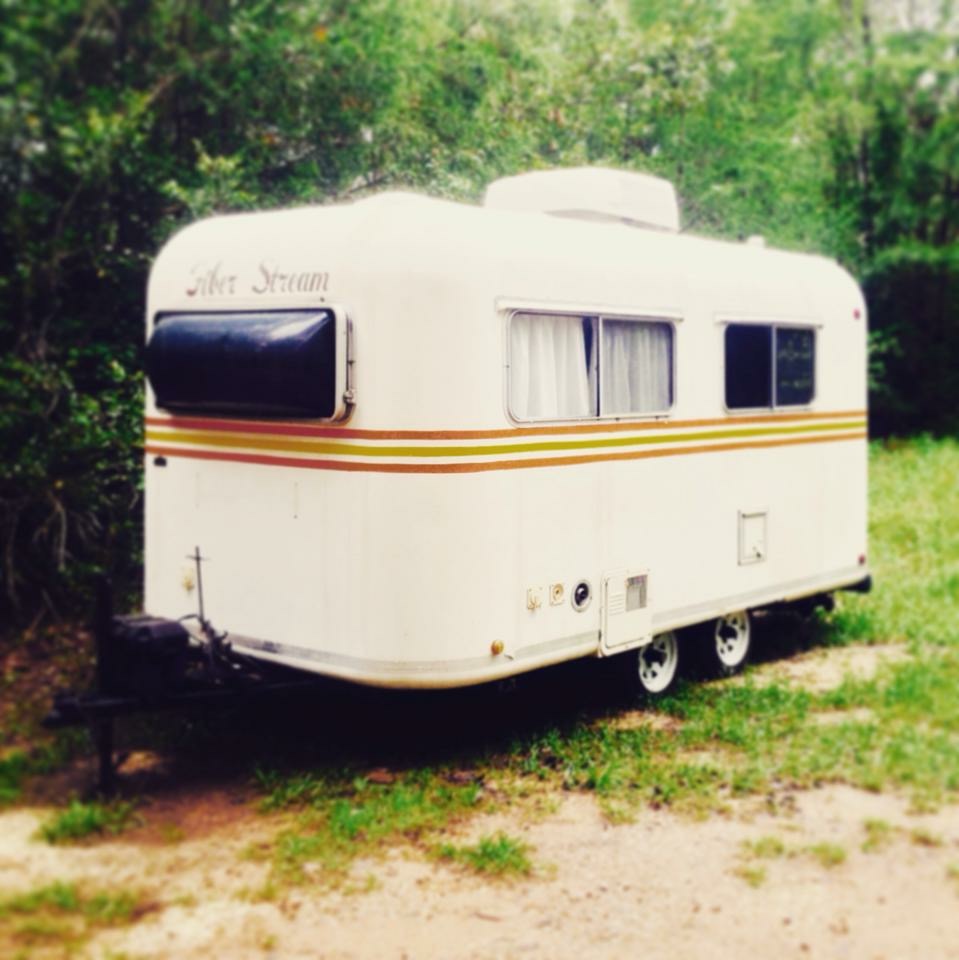
5. Fiber Stream RV Trailers
Let’s talk about the little guy—the underdog with a cult following. Fiber Stream trailers were the quirky, compact units that made you question why you’d ever need anything larger.
The Allure
These lightweight fiberglass trailers were easy to tow and had a distinctive bubble-like appearance. They were the perfect getaway vehicle for couples or solo travelers who wanted simplicity without sacrificing comfort. Plus, their durability meant many are still on the road today, a testament to their build quality.
The Demise
Production fizzled out in the late ’80s due to stiff competition and limited marketing reach. In a market dominated by big names with bigger advertising budgets, Fiber Stream couldn’t keep up, and that’s a crying shame.
The Comeback We Need
With the current trend toward minimalism and tiny living, a modern Fiber Stream could be a hit. Update the interiors with sustainable materials, add some solar capability, and you’ve got a micro-home ready for the 21st century. It’s time for the David of the RV world to sling another stone.
6. Toyota RVs
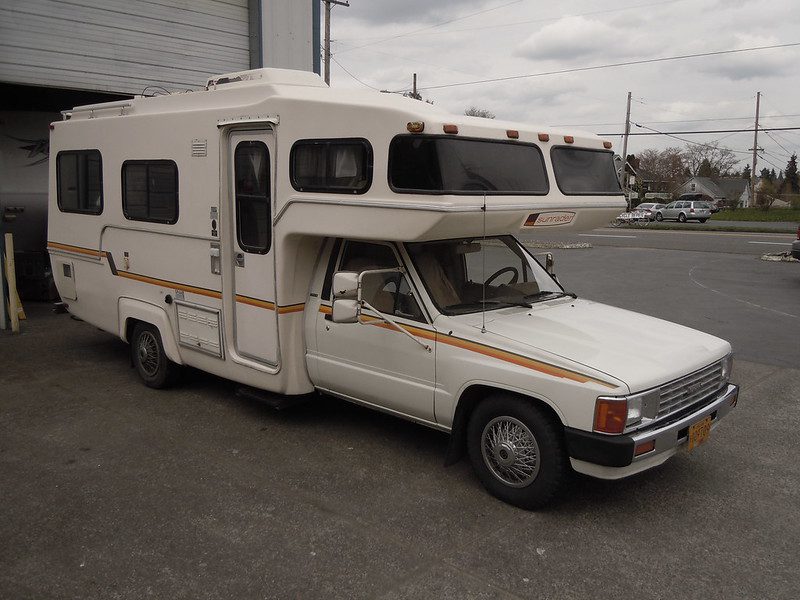
Remember when Toyota dabbled in the RV scene? If you don’t, you’re missing out on one of the most charming chapters in motorhome history.
The Allure
Built on the Toyota Hilux chassis, these mini motorhomes were the epitome of efficiency and reliability. They were compact enough for city driving but equipped for cross-country adventures. With fuel efficiency that today’s RVs can only dream of, they were the practical choice in an impractical market.
The Demise
The combination of increased safety standards and the limitations of the half-ton chassis led to their discontinuation in the early ’90s. Plus, let’s be honest, profit margins on these weren’t exactly thrilling for manufacturers.
The Comeback We Need
In our eco-conscious era, a fuel-efficient, compact motorhome is more relevant than ever. A hybrid or fully electric Toyota RV could disrupt the market. Toyota, you’ve got the tech and the reliability—stop teasing us with electric SUVs and give us what we really want.
PRO TIP: Can The Toyota 4Runner Tow a Camper Trailer?
7. Livin’ Lite Travel Trailers
Closing out our list is a brand that understood the assignment: build lightweight, durable trailers without all the fluff. Livin’ Lite was the no-nonsense option for people who cared more about the journey than the Instagram photo-op.
The Allure
Constructed with aluminum and composite materials, Livin’ Lite trailers were immune to rot and significantly lighter than competitors. This made them easier to tow, even with smaller vehicles—a game-changer for those not keen on investing in a gas-guzzling truck.
The Demise
After being acquired by Thor Industries, production halted in 2018. It appears that corporate consolidation claimed another victim, streamlining operations at the expense of variety and innovation.
The Comeback We Need
Reintroduce Livin’ Lite with a focus on sustainability. Market them as eco-friendly options that don’t require a beast of a vehicle to tow. In a world increasingly conscious of its carbon footprint, this could be the trailer that sets a new industry standard.

The Last Dance with these Discontinued RVs
In an industry that’s become a sea of sameness, the discontinuation of these RVs feels like losing the headliners from a festival lineup, leaving us with a bunch of cover bands. It’s high time manufacturers took note of the demand for unique, quality, and innovative RVs that break the mold.
So here’s my plea to the powers that be: Bring back these legends. Give us the Nests, the Born Frees, the GMC MotorHomes of the world. Because the open road deserves better, and so do we.
Now, if you’ll excuse me, I’m off to scour online classifieds for a used version of these classics before they’re all snatched up by people with equally impeccable taste.
We’ll Help You Find the Best Free Camping in the USA
You should give it a try!
As a matter of fact, these free campsites are yours to enjoy. Every time you pay federal taxes, you’re contributing to these lands.
Become a FREE CAMPING INSIDER and join the 100,000 campers who love to score the best site!
We’ll send you the 50 Best Free Campsites in the USA (one per state). Access the list by submitting your email below:
You missed the most sought after discontinued RV. The beloved Winnebago Rialta.
As they owner of a 2004 Born Free, I sure wish that company was back in business!!
The Rialta was great for design of the RV itself, but bad choices for drivetrain. First the Renault, then the VW. The first was always breaking down. The second also had problems, not the least being very hard to find mechanics to work on everwhere people in the USA travel. Plus expensive to have fixed.
It would be great if the Toyota Chinook could be reborn as a more affordable and nimble Tiger. Lifted, 4WD, modern interior, and with plenty of solar and off-grid capability. I have friends with Tigers, great vehicles but too large for my kind of travel (also sleeping up-top is like sleeping in a coffin, but that is my issue, none of them mind).
As far as the others on the list, the Nest was too expensive and similar to the much more capable Basecamp. It would be great to see a modern version of the GMC – ran across an old one in Anza and got a tour, pretty cool rv – too big for me, but was surprised to see it so far off the beaten path.
One of those beautiful old GMC motorhomes is in the RV park where I’m at in CA. So pretty and low compared to today’s big boxy class As. A friend of mine lives in one of the old Toyotas with the nearly indestructible 4 cylinder engine.
The more I read the more it seems Thor is destroying the RV world. Buying out everyone and now the world’s largest RV manufacturer. Of crap. They outright discontinue good ones, and change quality of the others. Downward, not upward! They look great, but breakdown and fall apart if used full time.
The XPLORER 230XL built on the current Ford E350 cab chassis is my preference
Is there any reason you passed over the Glendale Titanium fifth wheel? These were built with quality in mind. They were a lighter-weight trailer with real wood cabinets, drawers and doors. Most of us who have them are not parting with them. The concept was bought by an American company who shall remain nameless (because my “rememberer” isn’t working right now!) and that company put a couple out for a year or two then dropped it. I have one of the older ones (2002) and I love it!
When Bluebird moved from the Transit Home to the Wanderlodge, they built 10 prototypes in 1964-65. Then production began in 1965. I own the first of the prototypes. 1964 Bluebird Wanderlodge built on a GM chassis with a GM 348W gas truck engine. I have repaired, rebuilt, and restored top to bottom, including a few upgrades. I now live and travel in my Bluebird of Paradise full-time.
Many of the Toyotas were upgraded with modified Ford or Dana rear ends.